The Silent Hum of Information
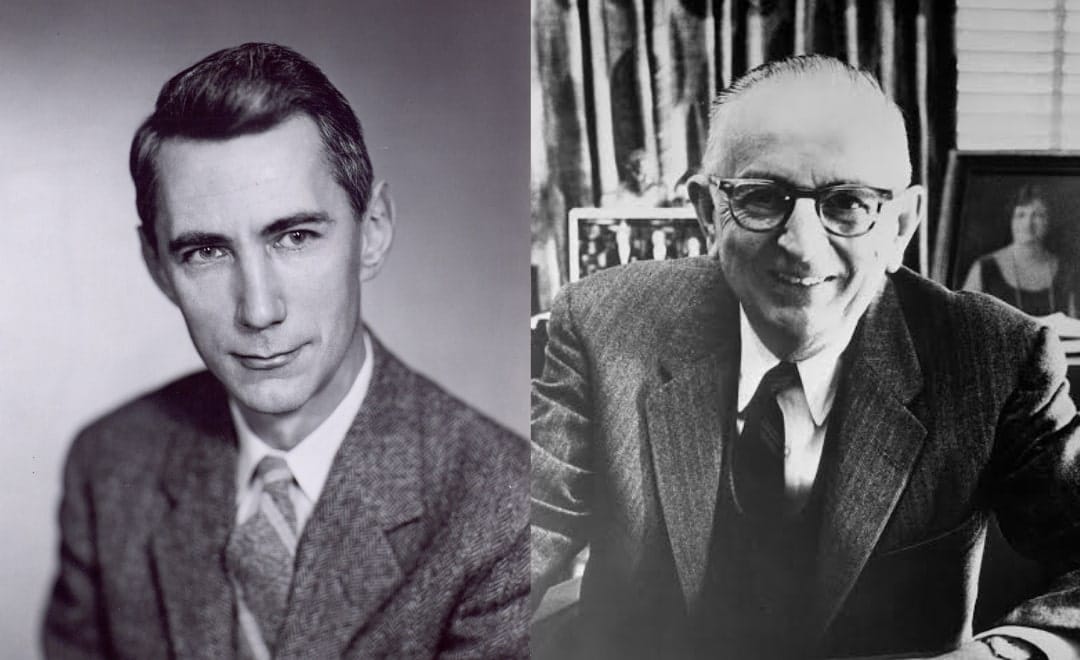
While studying at the University of Michigan, a student named Claude Shannon was deeply impressed with a 1928 paper published by the Bell Telephone Laboratories. “Transmission of Information,” by Ralph V. L. Hartley, proposed one of the first quantitative definitions of information, arguing that the information in a message depends not on its meaning, but rather on the number of possible symbol sequences in the transmission.
At first, Hartley's paper was a minor contribution to the great scientific demotion of the conscious human individual, begun by thinkers like Copernicus, Darwin, and Freud. These figures taught us that we weren't the center of the universe, separate from the animals, or masters of our own thoughts and feelings. Now, even messages didn't need us. Information wasn't necessarily something a human believed or wanted to express. It was simply a numerical abstraction that could exist completely outside of human thought or intention.
Twenty years later, when Shannon himself was a new employee at Bell Laboratories, he built on Hartley’s idea to write his own groundbreaking paper, “A Mathematical Theory of Communication.” Along with the transistor, another Bell Labs innovation from 1948, this theory formed the basis for all digital technology. But as James Gleick writes in his classic book The Information, "The transistor was only hardware." Information theory was "an invention even more profound and more fundamental."
In fact, over the decades, information would become far more than the theoretical basis for a new kind of communication technology. It would ascend to an ideology, a theology, a way of life.
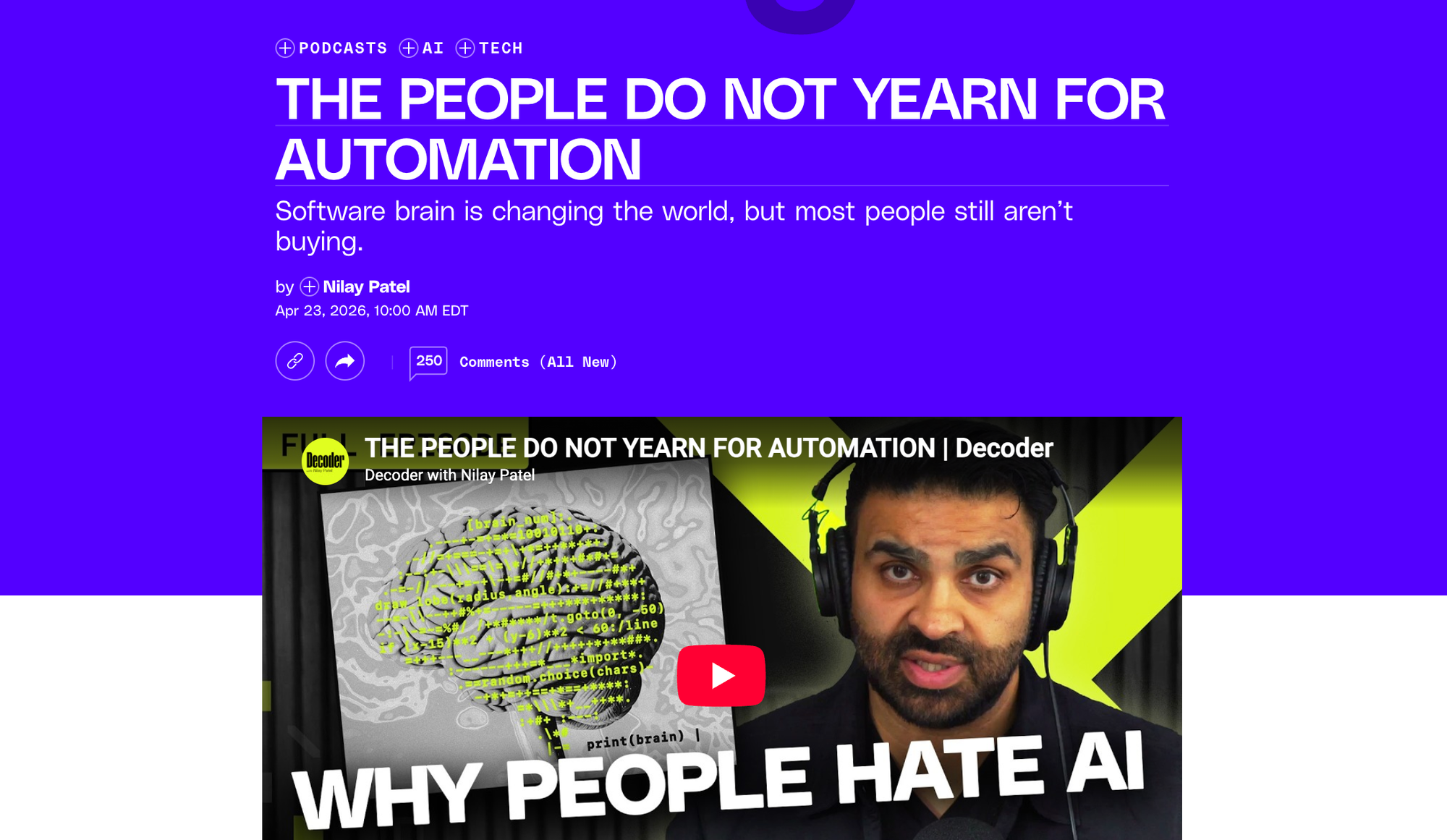
Recently, The Verge's Nilay Patel has adopted the term "software brain" to refer to "a particular way of seeing the world that fits everything into algorithms, databases and loops." Software brain is why Sam Altman and Dario Amodei were so unprepared for the massive AI backlash of the past year. Software brain (and a whole lot of hubris) is why Elon Musk and DOGE mistook government databases for the actual government and deluded themselves that AI prompts would save taxpayers billions of dollars. And software brain, I would add, is why Suno CEO Mikey Shulman thinks, "It’s not really enjoyable to make music." Music, you see, is just a software-shaped problem to be solved by—you guessed it—AI.
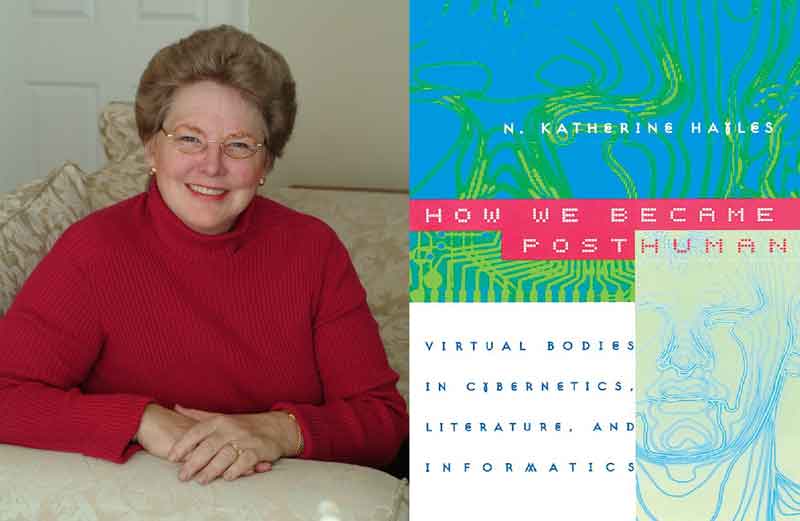
As Patel acknowledges, he is not the first to notice this kind of tech idealism. Back in 1999, N. Katherine Hayles described how our culture had come to believe in information as something that exists apart from its material substrates. Information had become a disembodied entity that flowed freely between different media. The human mind itself was now software, conceivably uploadable into a computer. Our bodies had become mere hardware rather than an essential facet of our humanity.
My own term for this ideology is "infocentrism." In my 2019 book Hush: Media and Sonic Control, I explored how infocentrism encouraged us to treat the sounds around us as just another kind of content, while treating our own listening bodies as cybernetic technologies, augmented by the on-off interface of our noise-cancelling headphones. Our lived world was becoming more and more like the internet, I argued, in that we engaged with it selectively, pre-filtering our sonic experience according to an information/noise binary. As a result, the physical world was becoming less and less an actual space of unexpected pleasures, social exchange, and embodied knowledge.
Another thread in Hush was my critique of Mihaly Csikszentmihalyi's concept of flow. Honestly, I'm surprised this concept, which has been extremely influential, doesn't get more pushback. According to Csikszentmihalyi, flow is the optimal psychological state, a condition of full immersion, deep focus, and energy while performing an activity. Csikszentmihalyi called his work “a phenomenological model of consciousness based on information theory” (1990, 25–26). Because information is the fundamental building block of consciousness in his theory, flow is entirely a matter of how we select, process, and structure information.
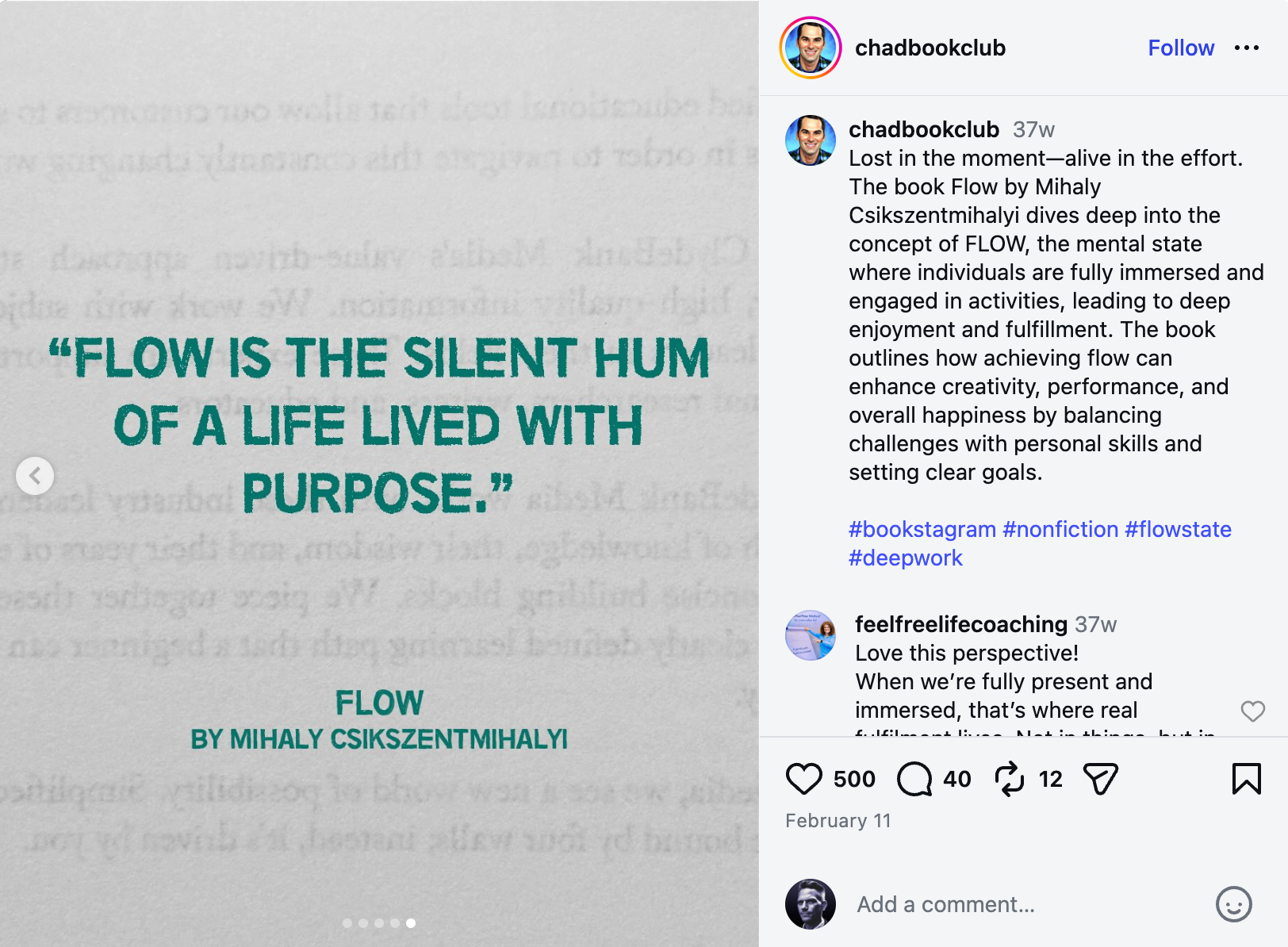
Flow is software brain made literal. It's a mentalist and individualist paradigm well suited to "creatives" and entrepreneurs, one that encourages us to treat the world and other people as a database of content that we selectively access in pursuit of self-optimization.
The flow concept stems from the central problem Shannon added to Hartley's information thesis: noise. AT&T’s phone lines were inevitably disturbed by random interference. Shannon’s mathematical innovation was to equate both information and noise with statistical uncertainty, represented by a formula for entropy that he lifted from the second law of thermodynamics. Modeling an information/noise binary allowed Shannon to add structure and redundancy to a message so that errors caused by noise could be detected and corrected—allowing the information in the original message to flow to its destination intact.
In other words, in Shannon's theory, noise became information's evil twin. Noise was the information you didn't want. The antimatter that degraded and threatened the information you did want. And even though Shannon didn't ever associate information with truth or knowledge or goodness or life or even just some kind of invisible stuff, most of us—consciously or unconsciously—eventually would.
You can already see information/noise gaining a moral valence in Warren Weaver's influential introduction to Shannon’s theory. “Information is a measure of one’s freedom of choice when one selects a message,” he wrote. If I want to transmit my answer to a yes/no question, there’s very little freedom of choice in selecting my message—the answer can be represented by a one or zero, a single “bit” of information. If I want to tell you the story of my life, however, there are millions of ways to do it, in terms of possible symbol sequences—a much greater amount of information.
There's a peculiarly American flavor to Weaver’s description of what is basically a math problem. It would have been simpler to write that information is a measure of uncertainty. A coin toss will be either heads or tails—very little uncertainty, therefore very little information. A more complex message involving more choices will add much greater uncertainty for the person at the receiving end, as it becomes harder to tease out the intended signal from the random noise. But instead of emphasizing this negative-sounding association between information and uncertainty, Weaver equates information with freedom. More information equals more freedom of choice.
In order to maximize one’s freedom of choice in a system of communication, one needs to subtract out the uncertainty at the receiving end, minimizing the noise that interferes with choice. In this new model of communication, noise becomes the enemy of freedom.
This morally tinged technical understanding of informatic noise quickly slipped into our everyday understanding of sound. Noise became a greater threat to our freedom, to our flow, to our agency. This was made all the worse by the cognitive pressures of a new information economy and information society, which made sound seem more noisily distracting.
Infocentrism tells us that freedom of choice is the ultimate purpose of all communication. As Shannon’s former MIT professor Norbert Wiener wrote in his creepily titled book for laypeople, The Human Use of Human Beings, information in pursuit of self-control is the lifeblood of all systems, living and otherwise. After all, we are simply information processors. Life is really just an existential “battle between progress and increasing entropy.” The efficient flow of information is everything.
The belief that information is the essence of all things has by now gone beyond an ideology to become a religious truth like qi or the Holy Spirit. To varying degrees, we are all software brained. The difference between today's tech titans and the average citizen is that the tech billionaires and trillionaires are the great Popes of infocentrism, while the rest of us are mere believers and practitioners, flowing and self-optimizing ourselves into a state of social and environmental alienation. Between 2005 and 2019, to cite just one example, human speech declined 28% in the United States. The church of infocentrism enforces a monastic silence.
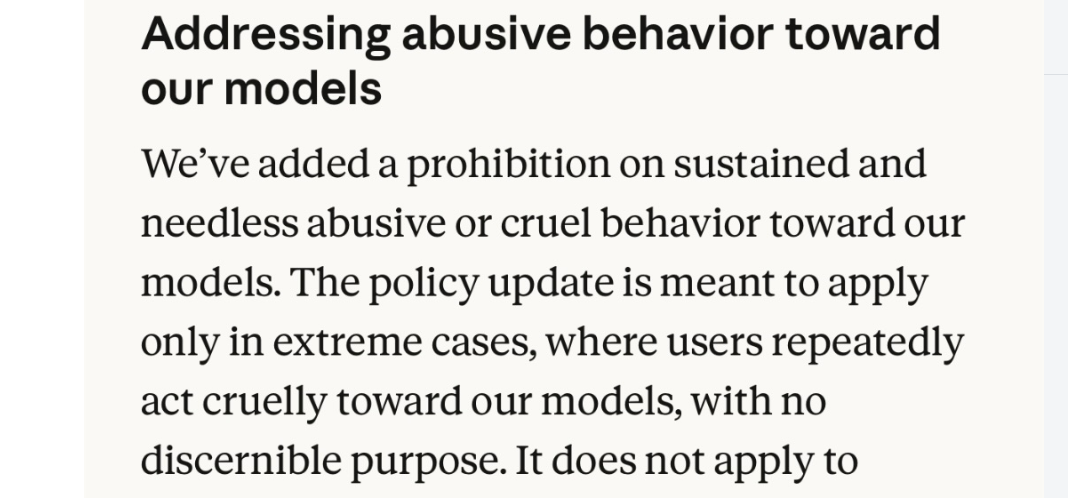
It was all there from the start in Hartley’s premise that a message was just a sequence of choices among a set of possible symbols. This made the humanity of the speaker irrelevant. It created a glide path to cybernetics and to Anthropic's current belief that computer programs are our moral equals, needing protections from "cruelty," which comes in the form of silencing undesirable human users.
Infocentrism and its associated digital technologies encourage us to think of ourselves as computers, at our best when we operate with what Csikszentmihalyi called the "silent hum" of flow. Our devices are designed privilege the freedom to select a message over the uncontrolled interactions of human co-presence. We retreat from the noisy interference of others because it threatens our silent hum. In so doing, we withdraw our attentions and affections from the real physical and social spaces around us.
A theory originally designed to help us verbally communicate now seems to promote an inhuman silence. What kind of freedom, one wonders, is this?
