What exactly was the Walkman?
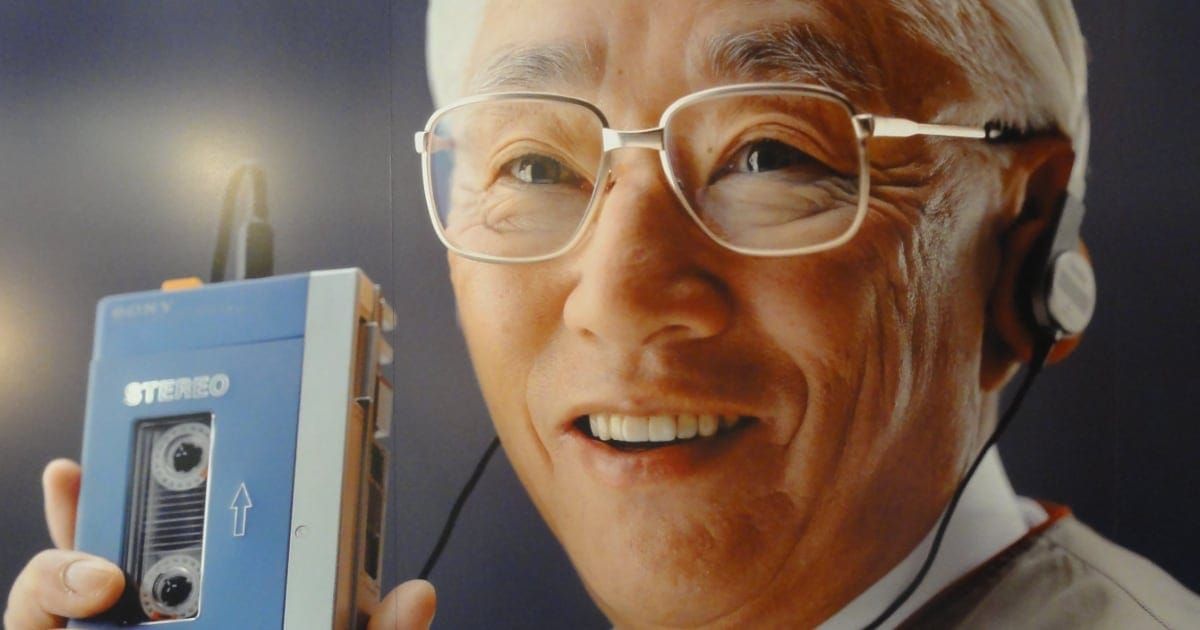
"The public does not know what is possible..."
In the late 1970s, Sony co-founder Akio Morita started pushing the concept of a personal, portable, stereo cassette machine with lightweight headphones. Sony’s engineers, accountants, and marketers were in unanimous agreement that this was a terrible idea. To make a device as small as Morita wanted, the engineers would have to remove recording capability, thus defeating what had always been the central purpose of a tape recorder.
Perhaps more importantly, there was a troubling question hanging over what would become known as the Walkman: what kind of psychopath would want to walk around in public in complete sonic isolation from everyone around him? Social opprobrium seemed guaranteed. Indeed, when Morita brought home a prototype to test at home, his wife gave him the stink eye for selfishly consuming songs that she herself could not hear.
Sure, Jazz musician and engineer John Koss had invented stereo headphones way back in 1958, but for most people, headphones weren’t the norm, even at home. So who was going to walk through the city rejecting everyone around them and visibly pleasuring themselves in public? There was something about the whole concept that seemed a bit indecent.
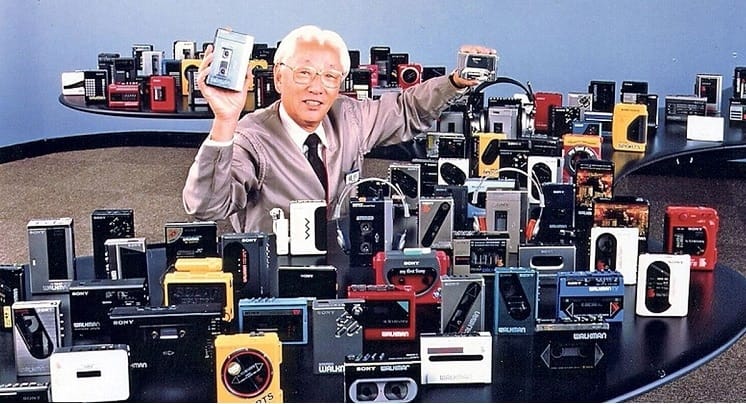
But this was just the kind of challenge that Morita relished. As Rebecca Tuhus-Dubrow writes in her excellent book Personal Stereo, “Like many entrepreneurs, he sought to create new desires rather than meeting existing ones.” Or as Morita once wrote, “The public does not know what is possible, but we do.”
Hedging
Nevertheless, Morita hedged his bet. He added a second headphone jack to the Walkman so that people could listen in pairs. Sony even added a button-activated “hot line” so friends could instantly mute the music and talk to each other like real human beings. To see the dual headphone in action, check out this mind-bending Japanese commercial:
Walkman for two
Today, of course, the second headphone jack is just a historical footnote. We all know that the sonic and social isolation of headphones is a feature, not a bug. But why? What was the Walkman, exactly? What was so compelling about the experience it offered? A lot of theories, both aesthetic and social, were bandied about after the Walkman's 1979 debut. In the emerging fields of media and cultural studies, the Walkman became a hot object of study, way up there with subcultures, the Black Atlantic, and Madonna. We'll take a closer look at the critical response in a future installment.
For now, however, I want to zero in on something that the Walkman began to make legible about media and communication writ large. To both scholars and laypeople, the most basic definition of media was that they were communication technologies. To be sure, the Walkman afforded a powerful form of musical communication, but it did so by discouraging other communication. This had always been true of media—we can only pay full attention to one thing at a time, after all—but it hadn't been demonstrated in such a dramatic fashion, by visibly covering the user's ears in public.
Orphic Media
Morita had not so much invented a new desire as found a new way to serve a very old one. Humans had always wanted to feel a sense of autonomy and control and there had always been two main ways of attaining it. The first was to control your environment and people around you—the history of technology (and politics) is more or less the story of our attempts to do that. The second was to control yourself—attempts of this sort produced a long history of philosophical and spiritual practices, from asceticism to Zen.
The Walkman sat right in between the two. It didn't exactly control your inner or your outer world, but it did create a kind of interface between the two. It helped you control your perception of the world, and therefore, it helped you control how you felt within that world. It was not the first technology to work this way and it certainly wasn't the last, but it prompted a new cultural awareness of this kind of possibility—what I call the "orphic" dimension of media.
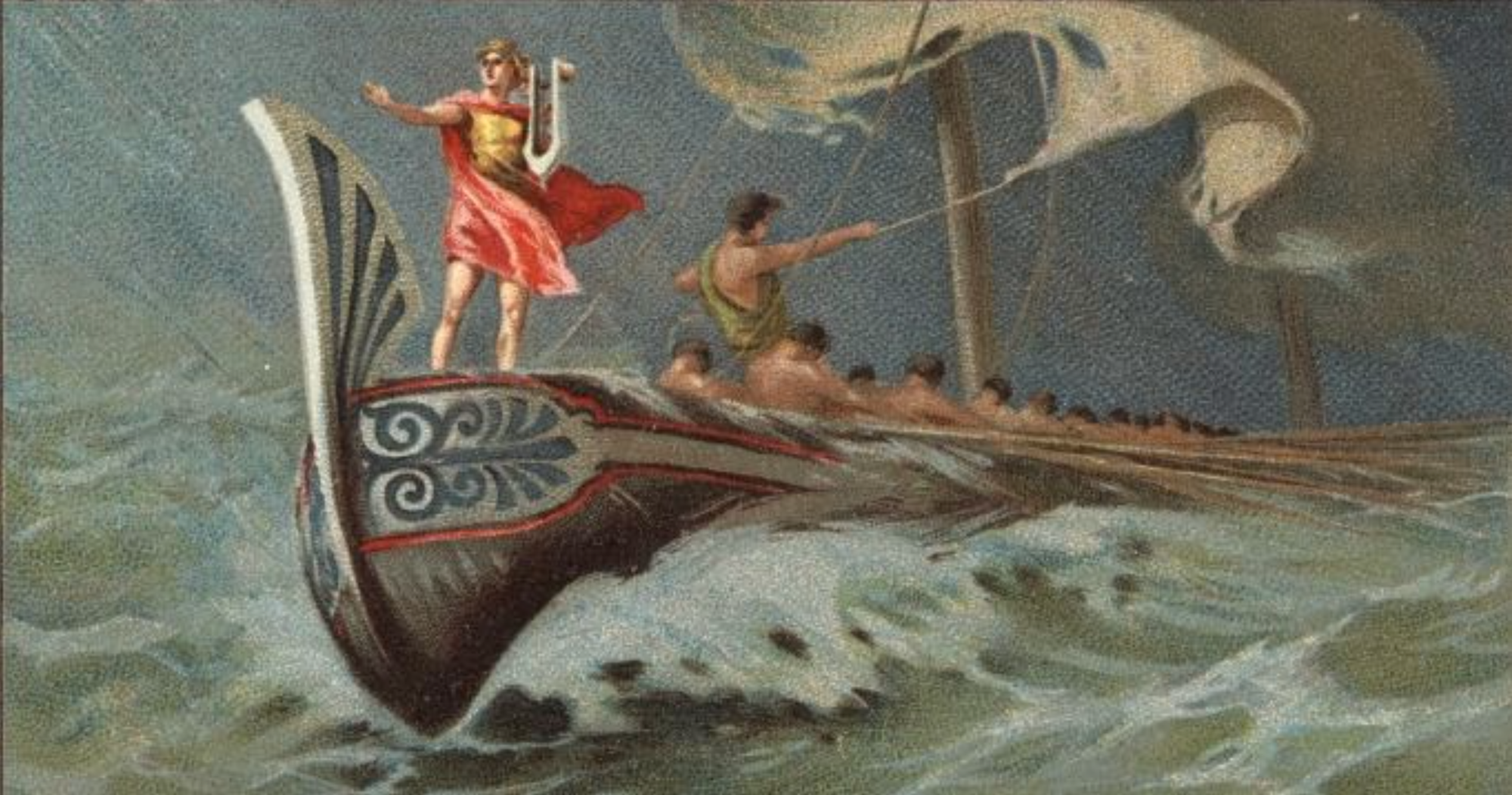
Orpheus, as you may recall, is a sort of musical priest in Greek mythology. His music helps the Argonauts row together in time and it glorifies the gods when they discover new lands. When the Argo encounters the deadly Sirens, who sonically seduce sailors and kill them, Orpheus plays his lyre and sings his own countersong to protect the cognitive freedom of his fellow Argonauts. Fighting their sound with his sound, Orpheus conjures both an ancient dream of sonic control and our own noise-canceling practices of today. When we mask external sound with white noise or cancel external sound with headphones, we also control our own attention and create a virtually controlled environment.
Notice how this orphic use of media complicates that everyday definition of media as communication technologies. The pleasure of orphic media is at least as much about disconnection as it is connection.
In a Landscape
The isolation of solo listening removed social distraction from musical experience, allowing different kinds of sonic experience to emerge. Your mind was free to wander a field of words, rhythms, and musical notes, slipping down wormholes to forgotten pasts and imagined futures. You could soundtrack the visual experience of your life. If music had always been a source of collective experience and identity, solo listening allowed you to traipse through synesthetic landscapes all your own—hybrid spaces no one else could ever know.
The new powers the Walkman offered did not go unnoticed. The device became a defining technology for Generation X and the object of much criticism and moral panic. For thinkers on the left, the Walkman posed a conundrum: Did this device offer young people a way to resist the rhythms and power structures of capitalism? Or did it simply suck them deeper into the ideologies and distractions of "the culture industry"?
In my next entry in this series, we'll take a look at the critical response to the Walkman and iPod back in the day. What were the hopes, fears, and critiques around mediated listening back then—and can they teach us anything valuable about our present era of "screenagers," AirPods, AI, and social media deluge.?
