The Walkman Debate Predicted Our Digital Dilemma

When it arrived in 1979, the Walkman was immediately compelling. Its iconic little headphones with the orange foam covers were a revelation: you could hear true stereo when you were out and about. Those little cassettes allowed you to hear whatever you wanted, not what a radio DJ selected for you. And while the headphones had none of the noise-canceling power we expect today, they were remarkably good at fabricating a sense of private space.
Cultural critics, however, were torn: Did the Walkman provide a kind of everyday sonic resistance or did it turn us into zombies?
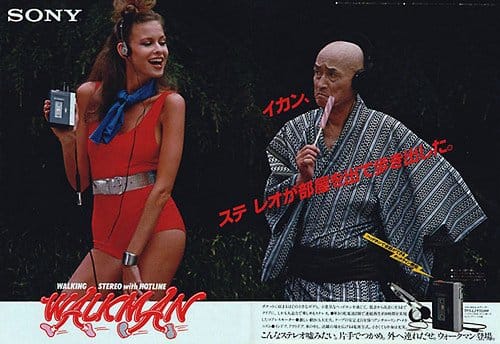
A sonic tactic for urban life?
A lowkey debate broke out among journalists, scholars and critics. One French reporter grilled teens and twenty-somethings with a litany of media-panicked questions: Are you still human while wearing a Walkman? Are the relations between your eyes and ears destroyed? Does the Walkman make you psychotic? Schizophrenic?
Shuhei Hosokawa mocked this fear mongering in his 1984 classic, "The Walkman Effect," allowing one of the reporter's young respondents to express his own thesis. The reporter's questions, the kid explains, are out of date:
All of these questions of communication and incommunicability, according to him, belong to the sixties and seventies. The eighties are not the same at all. They are the years of autonomy... Soon, he says, you will have every kind of film on video at home, every kind of classical music only on one tape. This is what gives me pleasure.
Aside from a bit of miniaturization, Hosokawa asserted, the technology of the Walkman wasn't really so innovative. What's revolutionary is the practice of listening that it encouraged—a kind of listening unbound from the space we find ourselves in.
As Michel De Certeau wrote in his 1980 book, The Practice of Everyday Life, we all move through spaces that have been carefully strategized by the powerful. The Walkman, leftist critics said, gave individuals a sonic tactic to work with, a way of making both the city and the rhythms of our day our own again. The Walkman gave the alienated city dweller a new way of making their commute meaningful, albeit with a meaning made for one.

Or Aural Solipsism?
The Walkman taught us that in an increasingly privatized city, devoid of meaningful, shared acoustic spaces and colonized by music designed to captivate and monetize our attention, the best solution is to privatize one's own soundscape even further.
Years later, this lesson would be powerfully crystalized in the famed "Silhouettes" TV ad campaign for the iPod, the technology that more or less fulfilled that French youth's prediction of "every kind of music only on one tape." In the ads, a solo listener walks through a cold, grey, alienated city while colorful dancing posters represent the warm and vibrant interior life offered by a pair of earbuds and "a thousand songs in your pocket."
Still, some critics couldn't shake the suspicion that these mobile listeners were enjoying a faux liberation--or at least a partial one. As the great sociologist of the iPod, Michael Bull wrote, such a listening self "rebels at the very same time as it is seduced—this is the dialectic of iPod culture." An emerging "aural solipsism," Bull found, used music to erase others from social space while creating a "cocoon" of safety and control. In this way, he claimed, “users are both colonized and colonizing.”
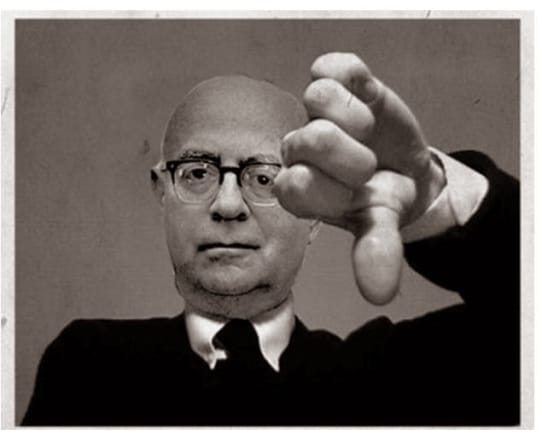
Substitute Gratifications
Left cultural criticism had taken a populist turn in the 70s and 80s: TV and popular music weren't merely the opium of the masses and regular people weren't simpletons. Popular culture was a medium in which people could construct their own meanings and fight entrenched power. But in his 1990s critiques of the iPod, Bull was now bringing the "culture industry" criticism of Theodor Adorno and Max Horkheimer back into the mix.
A central concern of that earlier wave of criticism had been capitalism's use of media to supply the masses with standardized facsimiles of authentic social relations. In "The Culture Industry Reconsidered," Adorno claimed the culture industry manufactured "substitute gratifications" to salve the alienation and ennui people experienced in modernity.
Worse yet, the time they spent consuming these cultural commodities further alienated them by taking up their leisure time, thus "the substitute gratification which [the culture industry] prepares for human beings cheats them out of the same happiness which it deceitfully projects." The substitute gratifications were to become a source of concern for Bull as he examined iPod use.

Digital infinitude
The original moral panic around the Walkman had been short-lived—and not just because the usual cultural watchdogs on the left were in their optimistic era and mostly gave it a pass. The Walkman just didn't make a great villain. Cool as it was, the technology was also janky enough to seem unthreatening. The headphones were leaky, the tape length was limited and always getting eaten, and the batteries were constantly running out.
The iPod, however, was our first brush with mobile digital infinitude. You could wear it for hours at a time and the content was virtually limitless.
Through an extensive survey, Bull accumulated empirical evidence that people were purposefully using this newfound power to replace human contact with a commodified, controllable musical substitute. Music used not to connect, but to separate.
The content that people listened to was giving them a feeling of "we-ness" and yet they were, in fact, alone. And fast on the iPod's heels was coming a technology to create a sonic seal around the user: noise-cancelling headphones. All the better to enjoy the quiet comfort of substitute gratifications.

Yesterday's headphone skirmish, today's screen time battle
One thing I find interesting about the old Walkman and iPod discourse is how it anticipates the arc of our feelings about screens. Yes, the "debate," if you can even call it that, was pretty mellow—somehow, people have never gotten all that worked up over headphones. But you can still see in it a muted version of our torrid affair with the black mirror, from utopian visions of digital freedom to the growing sense that the digital feed is starving many of true companionship.
Today, we're left with the same questions about our smartphone that we never quite resolved about the Walkman. Is it meaningfully connecting us to a wider culture? Is it empowering us? How is it changing our relationship to the physical spaces around us? Is it cutting us off from others? Is it fooling us with a feeling of "we-ness" while locking us away from the world? There are a lot of factions forming around these questions and the sniping is heated, particularly around the issue of kids' screen time.
As a scholar of audio media, I wish people would connect the current screen time battle to the earlier headphone skirmishes. For one thing, there's a lot to be learned from the earlier debate—and from studying which hopes and fears did and didn't manifest. Also, headphones are actually playing a powerful and severely under-appreciated role in the digital dynamics now under debate.
In fact, the questions raised by the Walkman and iPod are more relevant than ever.
In the next installment of this series, we'll explore our current era of digital audio and noise cancellation. Digital listening is more than a technological practice. It's also an ideology that affects how we communicate with one another more generally, whether we happen to be wearing headphones or not. If you're not a subscriber, sign up so you don't miss it.
