Talking Back to the “The Oral Theory of Everything”
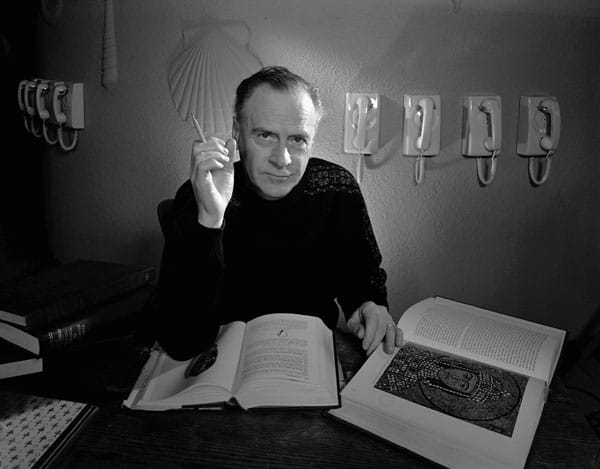
Why does a sixty-year-old media theory resurface in the media every few years, while journalists ignore the great communication scholarship that has emerged in the meantime? More importantly, what effects does antiquated thinking have on the public understanding of our current digital discontent? In this episode, Cameron Naylor interviews our usual host, Mack Hagood, about his recent newsletter, “Oral Residue: A Zombie Media Theory Rises Again.” Marshall McLuhan and Walter J. Ong believed that all of human history is dividable into three eras: the oral, the literate, and the electronic. However, this kind of “Great Divide” thinking has long been criticized by scholars who study oral communication, literacy, media, and sound. In this episode we talk about the good, bad, and ugly of McLuhan and Ong’s long legacy.
Cited Media:
Marshall McLuhan - Understanding Media (1964)
Walter J. Ong - Orality and Literacy (1982)
Raymond Williams - Television: Technology and Cultural Form (1974)
Derek Thompson - Plain English (podcast episode with Joe Weisenthal)
Jonathan Sterne - The Audible Past
Harold Innis - works on communication theory
Eric Havelock - works on orality and literacy
Gerard Manley Hopkins - Poetry
Homer - The Iliad and The Odyssey (8th century BCE)
Transcript
Intro: Spectrevision Radio.
Mack: What frustrates me is, you know, years of media studies happened since McLuhan, and people just keep rediscovering McLuhan, And acting like this is this new explanatory theory that explains everything which erases 50 years of subsequent media scholarship where we said ' Hey, McLuhan is right about some things and wrong about a lot of other things.'
Intro: This is phantom power.
Cameron: Welcome to another episode of Phantom Power, a podcast about sound. I'm Cameron Nailer coming at you from a rainy Manchester in the uk. And some of you might be thinking, where's Mack gone? Well, in this episode we're gonna be doing something a little bit different. We're flipping the script and I'm gonna be the one interviewing Mack.
So, in today's episode, we'll be having a conversation about the Great Divide Theory. A quick refresher on the Great Divide, it's a theory of oral communication, literacy, media, and sound that was written about and publicized by Walter J Ong and Marshall McLuhan in the sixties and seventies.
It was made popular through McLuhan 's 1964 book Understanding Media, which coined a whole host of notable aphorisms, such as 'the Age of Information', 'the Medium is the Message' and the 'Global Village', just to name a few.
So we'll be exploring Mack's introduction to the theory, his thoughts and feelings about the thinking outlined in the book, as well as some of the critiques over the 50 years of media scholarship that has come after the publication of Understanding Media. And finally, we'll be breaking down why it is that journalists and commentators just keep coming back to this theory time and time again.
For those of you that are subscribed to the newsletter, you might be seeing some similarities between the topic of today's episode and last week's drop in your inbox.
This is a new format that we're trying out where we expand and dig a little deeper into the theme of the month's newsletter to hopefully give you an insight into the sort of thinking and questions that go into that piece.
If you aren't subscribed to the newsletter yet, don't click away, because we will be going over the thoughts and the thesis of that piece to get you up to speed on what has already been covered over there. But if you do want to read the piece for yourself and explore the other thoughts and questions not covered in today's conversation, then do head over to mackhagood.com and subscribe.
That's mackhagood.com. It's completely free to access. All you need is a name and an email to sign up, and once you do, we'll be putting out similarly interesting pieces on sound and media on a monthly basis. So if that sounds up your street, then head to mackhagood.com and click the subscribe button in the top right corner.
So without further ado, this is my conversation with Mack Hagood about the Great Divide Theory.
Cameron: Hi everybody. Welcome back to Phantom Power, I am Cameron Naylor. I am the editor for this show. First time behind the microphone, and today with me is Mack Hagood, you'll know Mack from every other episode.
But do you wanna give yourself an intro?
Mack: Longtime host, first time guest on Phantom Power.
Yeah, I'm happy to be here and have the tables turned on me.
Cameron: And so today we're going to be trying out a new format, a sort of experimental episode where we break down the newsletter that's just come out. So this is the zombie media theory Great Divide return of Marshall McLuhan .
And you have some thoughts and feelings on this topic to get the ball rolling. I wanted to ask you where you were when you first read or heard about McLuhan and Ong.
Mack: Oh my gosh. So, that goes pretty far back, I actually think I heard of Walter J Ong before I heard of Marshall McLuhan, and I think I heard of him way back in the eighties I went to a Catholic university, a Jesuit university and, Ong was a Jesuit. And I was studying drama and speech and that was an interesting degree because. It actually involved not only theater classes, but speech classes. So we had of classes I took that were led by this old Jesuit priest who taught us elocution, but also, you know, gave us an ear for things like, iambic pentameter or what have you. Right. And there was actually a lot of like standing up and reading aloud in the class and sort of memorizing poems and, voicing Greek tragedies and whatnot. And, it was super old-school ,and I actually loved it. I thought it was pretty amazing. And I didn't really think at the time that this was sort of a return to some ancient tradition or anything like that, but I just really enjoyed thinking about the way words sounded.
And, in retrospect it was a big influence on me and, Ong, you know, was a Jesuit priest, and when I think back on the way my professor, Father Furlita led that class, I can now realize that there was a lot of Ong influence. There that was happening. and, thinking a lot about, orality and its importance and Jonathan Stern in his critique of, the Great Divide, which may be for those who didn't read the newsletter, we should briefly just define. By the way, subscribe to the newsletter at mackhagood.com.
And then you can follow along with this, but. Basically the idea of the Great divide is that there are three types of human society. There was an oral society back in the day, and then the printing press was invented and then that radically reshaped not only society, but the human mind. And then we moved on to this electronic society, which created what on called secondary orality, which means it brought us back to an oral age.
And so As we move along, we can talk about like what those differences allegedly are and what problems I have with this theory, but, so basically, my professor, Father Furlita, was very much, I think an Ong type guy. He l loved Gerard Manley Hopkins, who was a poet that Ong wrote about. and by the way, Furlita was also the first priest I ever saw in running shoes. this was like the eighties. So the priests were all dressed in black and everything, but like he. He had these terrible bone spurs in apparently. and he would just like, you know, in his wonderful elocution be like, these spurs, these spurs and like lament the pain of these bone spurs that he had, which I'm sure was terrible.
So he actually was running around in, you know, cushy running shoes with his black priest outfit, which I thought was very charming.
Cameron: Yeah. and so when you were doing those classes, what was Ong's influence in that, in terms of the sort of, if you could give a background to the secondary orality and how that factored into those sort of lessons.
Mack: Oh, well, yeah, that's what I was starting to say about, Jonathan Stern's critique, or one of his critiques of this line of thinking is that. there's a definite sort of Christian ethos that comes through in this entire theory that there was, Even going back to like, you know, early translations of the Bible.
Like first there was the logos, you know, the, the word that establishes itself, as creation and so, there's just this whole kind of. Sort of Catholic Christian theology that's embedded in this idea that back in the day, in the oral era, we were closer not only to God, but to nature and to one another, with both positive and negative implications.
But there is this kind of, nostalgia for a lost age that I think is built into, this kind of orality thesis.
Cameron: And so in terms of McLuhan. Where did that start to factor in?
Mack: So that was much later I learned about McLuhan late in life. At least, I don't remember learning about him earlier, but when I went to graduate school to study in the Indiana University's folklore and ethnomusicology department. I really wanted to study popular music and the effects of technology on musical experience, both on the production side and on the reception side, and when I got to IU.
And I think ethnomusicology has changed a lot since then. And, that program has changed a lot since then. But at the time, people weren't really talking about media very much at least the ethnomusicology professors weren't. And I got a little frustrated and I asked one of my professors. I wanna understand the role of media.
Like 99% of the music I listen to is coming through a speaker of some kind. You know, like, why aren't we talking about this? And she was just kinda like, oh, I don't, you know, why don't you go read Marshall McLuhan? And I was like, okay, I don't know who that is. And so I went and I looked him up and he was like, I'm reading this book from 1964 and it has all of these kinds of. Sweeping generalizations in it that don't seem nearly as tight as what I had been learning in grad school in terms of like having evidence for an argument or whatever. And some of it, like at first I was really kind of blown away by it. I was like, this is cool. But then as I continued going through the book, I got increasingly frustrated with sort of detached from reality quality that I sensed the work.
So that was my first McLuhan experience.
Cameron: Yeah, in Interesting that you had that insight as you read through the book, because I think as you mentioned in the newsletter, part of that factors into why it was so popular at the time and sort of how it stands the test of time, those sort of universalities and the sweeping sort of generalizations.
Could you expand a bit more on maybe just a couple of those and sort of what your initial impressions were?
Mack: Yeah, I mean, so Marshall McLuhan sort of exploded onto the scene with his second book, which was called Understanding Media, and that's the book that I read from 1964. And I mean, within a year of that book coming out, he was on all kinds of American, and I assume, he was Canadian, so I assume Canadian talk shows as well. and there was this piece in a newspaper, a New York City newspaper that called him the most important thinker since Newton and Freud and Einstein and all of these people. and you know, I think there was a hunger to understand. I mean, media had this newfound power, you know, television, advertising, radio, there was a lot going on. Popular music had completely, changed society just on that verge of, you know, really this emerging hippie movement and all of these different things that were getting shaken up, the Beatles were on the scene. And so McLuhan I think saw a space that was in need of, some kind of explanation for laypeople and was very willing to fill that space. And then he did, I think, a clever thing, which is he sort of cultivated a certain celebrity through himself. By having these aphorisms that were very easy to understand, well, I should say very easy to remember, and then not necessarily very easy to understand in their implications. which is a really nice combo.
Right. So you say the medium is the message. I mean, that just sticks in your brain, but then you're like, what does that really mean? You know? And, the most general level is, it's not the content of the media that matters so much. It's, the technologies themselves and the way that they reshape the way we interact with one another and also the way we think and feel and experience the world and everything.
So, that sort of thing. Really people found I think very exciting. But then there were also just, he had lots of jargon, like hot and cold media at least for me when I was trying to read through, it seemed used in pretty inconsistent ways. At best was maybe if it was relevant just, more confusing than it was worth. I feel like there's something about Mc sometimes you wind up spending more time trying to decode McLuhan than you spend trying to understand the world itself in a certain way. And I think mcLuhan's work does lend itself to a kind of theological scholarship where his descendants keep revisiting his work and trying to tease out what certain things meant. I should say though that his work was extremely important and very, I don't wanna say it was influential on me because what it really was instead was it was the first time I saw someone thinking along some lines that I had already been thinking and were the reasons I wanted to go to grad school. so for example, he talks about media without content. That's a huge thing in my own work.
He talks about how The electric light bulb, it doesn't have a message, right? It sheds light in this new way that transforms the environment and reshapes day and night, and I'm saying similar things about the way we use audio media that, you know, I got frustrated that we were a little too fixated on the content of the music and stuff and not enough on the ways that it shapes the spaces we inhabit and the ways that we go through our day. Not that there was no one talking about those things, but I felt like it was not really explored nearly enough.
And that's what I was interested and like, when I first went to grad school, thing that I thought I wanted to do my MA thesis on was like, the history of echo, right? cause I was fascinated by the echo pedals for my guitar, and I was like, what's the cultural history of that? And like, how does echo shape experience? Well, echo doesn't really have content, right? We've, by the way, we've got a brilliant episode with Amit Pinchevski, the philosopher thinks through many implications of echo.
So I saw a fellow traveler in McLuhan, and I saw someone who had already thought of this stuff a long time ago, which is always a nice and useful and humbling experience for a young grad student who's full of piss and vinegar and thinks they're gonna change the world. And then you find out, oh yeah, a lot of people are about this stuff, right? So I have a lot of respect What frustrates me is, you know, 50 years of media studies happened since McLuhan, and people just keep rediscovering McLuhan. And by people, I mean journalists generally and acting like this is this new explanatory theory that explains everything which erases 50 years of subsequent media scholarship where we said 'Hey, McLuhan is right about some things and wrong about a lot of other things.' And, why don't journalists engage with that past 50 years? That's the thing that kind of sticks in my craw. That's why I've kind of wrote this sort of, you know, a little bit more feisty newsletter than perhaps I normally do.
But it bugs me a little bit.
Cameron: Yeah. Yeah, and along those lines of journalists rediscovering the Great Divide and bringing it back, out of the dead, as you say in the newsletter. Why this moment? What do you think it is that's brought this cycle of McLuhanisms back around?
Mack: Yeah, I mean when I started sort of like, thinking through what I was gonna say in this piece, I was sort of thinking about like, what work does McLuhan do? And Ong and this concept of the Great Divide, what does it do that makes it so appealing that it just keeps coming back? And I think you know, it basically does a few things.
One is it takes a very complex situation, which is basically the relationship between, you know, human culture, society, and our communications technologies and simplifies it, and just gives a very simple explanation. So it basically works the way that a conspiracy theory does.
But beyond that, basically because McLuhan wrote in such a way where things were kind of obscure, but also easy to remember at the same time, mirror that you can hold up to just about anything. Or the sort of hot take, you know, single sentence, maybe McLuhan esque way that I put it was that, the reason the Great Divide theory can explain everything is that it's not grounded in anything. and so at different eras in society, it keeps popping up to help us think through things at different moments. And so, like I said, in the 1960s, there was so much new media happening and so much change, and so he's saying things like, you know, we're moving from this literate culture to this new media culture that's more like a global village, that we're becoming more tribal in a way. Which you know, when you see these, like kids growing their hair out long and everything that like, that seems like that makes sense of everything in a certain way, right?
Like we're kind of going back to this old tribalism, at the same time that the hippies were interested in going back to the land and stuff like it gave that theory a certain explanatory power. Then when we move forward and there were like, when I was in college, you know, like in the eighties There was this whole the western cannon and how postmodernism was destroying western cannon and kids weren't learning the right things in college anymore and, people were becoming generally less literate.
And then also just so happened at that time, in the eighties, like the economy sucked even into the early nineties, the economy was terrible. and so there was a certain pessimism, and then ideas were used to explain that. Well, yeah, we're basically devolving. we're not literate anymore. We don't know our Shakespeare anymore. We haven't read our Milton or what have you, whatever these things that would make us a better society. And so we're devolving and we're losing.
So it's the opposite spin here. Like, the global village seemed kind of positive and hopeful, you know, through this stressful time of the sixties with so much change. Wheras this was a more negative take. But then when we get into the later nineties and the information superhighway and people start using the internet, suddenly mcLuhans back again 'cause the Global Village has an entirely new meaning.
And it, once again, it works beautifully. And we're like, look at this, this is what McLuhan predicted. We're all kumbaya together. And it's just kind of amazing. Like it can just fill in it any direction you want.
And today, of course, we're in the age of Trump and we're in the age of TikTok and everybody who's a professor or even a parent, knows it's harder to get young people to read today than it used to be. And have this president who is proudly ignorant in certain ways. And this feeds into the sort of stereotype of oral cultures because in this Great Divide theory, there's like the positive and there's the negative takes of oral culture.
The positive is the sort of kumbaya we're not so alienated from one another. The age of print alienated us. It made us what, McLuhan called typographic man. typographic man is very intellectual and can ponder a text for a long time and can, create, deep philosophies and theories and sciences and whatnot. By thinking abstractly because all the words are written down. They're no longer just disappearing the minute they come out of your mouth.
Cameron: Yeah.
Mack: And so that's the positive part of typographic man. The negative side is he's more alienated from the people around him, 'cause he's in this abstract mindset and we start establishing these bureaucracies that separate us and divide us.
The negative of the oral culture is that you're just, allegedly, living in an eternal present and there's no fixed memory of anything, and it's much more adversarial. It's about two guys getting in each other's face. And I'm using gendered language in all this because that's the language that's in this discourse. Getting in each other's face and arguing about stuff, basically. So that oralism is more adversarial, it's more direct, but it's also more adversarial and it's less grounded in fact or anything.
So today we see a guy like Trump and this guy Weisenthal from Bloomberg who was on Derek Thompson's podcast, which is sort of what sparked this whole thing for me. I was listening to this podcast, a podcast I enjoy very much love Derek Thompson's show actually. But, this guy, Joe Weisenthal was basically saying, this is Trump, Trump is oral. Like if you look at when Trump uses terms like Little Marco or Sleepy Joe, these are the kinds of epithets that Homer used to use from an oral age, like the rosy finger dawn or what have you, right? Like these are the mnemonic devices.
Derek Thompson, Joe Weisenthal: For our purposes, Wikipedia keeps track of all of Donald Trump's nicknames, so I didn't have to remember them. But speaking of outsourced memory, but here's some of them. Steve Bannon was sloppy. Steve Joe Biden was sleepy. Joe Michael Bloomberg was Mini. Mike Jeb Bush, of course. Low Energy. Jeb, crooked, Hillary Lion, James Comey, Ron De Sanctimonious, DeSantis.
I think that one might gotten away from Trump. Slab was later. That was late Trump. It was when he was, he was off his ball. He was, you know, didn't have his fast ball anymore. But, but to your point, like this plays into this classic tradition of orality, right? Yeah. The, the wine, dark Sea, swift footed Achilles White armed, he and Walter wrong, has a great passage where he, he writes about this that I, and I would love to get your reaction to this, this quote, and how it applies to modern politics.
Quote. The cliche is in political denunciations in many low technology developing cultures. Enemy of the people capitalist war mongers that strike high literates as mindless are residual formulary essentials of oral thought processes. End quote.
Mack: And the sort of oralism of an earlier culture where we did not think rationally and we were much more adversarial with one another, and so Trump marks this return to Oralism through these new technologies that we're all experiencing.
Cameron: Yeah, and there is that framing of, I think Weisenthal the word decline and regression and return, which you've spoke about, but there has been 50 years of scholarship and the way that we think about media and the way that we interact with media has completely changed. So what does this return to The Great Divide, miss.
Mack: Yeah. I mean, I guess what I would start off by saying is, again, like there's a grain of truth to all of this. Like the technologies that we use do influence how we communicate. Absolutely, a hundred percent. You know, there's a long tradition of scholarship, the so-called Toronto School of Communication that McLuhan comes out of, for example, you know, and Ong was founded by scholars like Harold Innis and Eric Havelock. In particular, I, have a ton of respect for his work. The question is like, these things have evolved over time and there have been lots and lots of critics and critiques of this idea that there are just these three states of communication and that's all that matters and that it's technologically dependent in this particular way. So, I mean, I guess I could walk you through some of them.
Cameron: Yeah. Let's go that way.
Mack: Okay. So the first one that I would say is this theory is technologically determinist. This would be the first thing that I would sort of kick things off for my students, like say in my Smartphone and society class. Very early in the semester, we'll talk about McLuhan's theories a little bit, and then we'll talk about the critique of McLuhan's theories by a guy named Raymond Williams who wrote a book called television technology and cultural form in 1974. So it came out about a decade after McLuhan, and it takes on what, Raymond Williams saw as McLuhan's technological determinism, which simply means that the technology itself determines what happens in history. and there's all kinds of problems with being technologically determinist. First of all, it's a little Deus ex Machina. Like where did the technology come from? Did God just cast the printing press down onto the earth, and then that changed everything? Didn't the printing press come from somewhere? And if it did, doesn't that suggest that there was some kind of cultural and social evolution that, you know, has some priors that were rooted in this so-called oral period that, you know, like, one thing I love to talk to my students about is like, there's two ways to tell any history you can focus on the ruptures.
You know, the ruptures are the big moments where everything seems to change. Or you can focus on the continuities and it's not that one is right and one is wrong, but, you know, you can focus on Trump and everything that's happened to the United States and the world since Trump appeared on the scene. And that would be a perfectly appropriate thing to do, but it would be incomplete if we didn't also look at what led to Trump and how. Actually, there were plenty of things in American culture that fed into the possibility of Trump.
So, it's the same thing with technology and Raymond Williams, his approach is cultural materialism. The idea that the culture and the material conditions feed into one another and alter one another.
So it's not a sort of economic determinism in a sort of traditional Marxist sense. It's not a technological determinist position in a McLuhan sense. It's more about political economy, class questions, institutional power, like all of these things McLuhan kind of erases when he says the medium is the message let's say, that's a big one. I mean, a second one, to get a little bit more on our traditional topic of sound on this podcast is what the great sound scholar Jonathan Stern called the audio visual litany, which is basically saying that, Ong' s Ideas about orality are deeply based in some kinds of predetermined assumptions about not only voice, but sound itself. And so sound is figured as more immediate and more affective and more natural, and more ephemeral than vision. And that vision is somehow, you know, like more distanced and cold and abstracted.
And, Jonathan had the insight to just say, you know what, that's bullshit. Like, none of that is true. You know, like, like sights affect us and sights surround us. And like, where's this all coming from? And then for Jonathan, it's coming from a certain set of theological commitments that feed through a lot of the Toronto school theories.
So, that's an important one too. And then I guess he would, also would've said that, theology makes the point already, but these aren't just assumptions. They're ideological assumptions, you know? and, and so those ideological assumptions, when we use these certain markers in history as like there was this period, then this period, then this period. It's not only like keeping us from thinking about certain continuities and stuff, but it's also doing ideological work.
For example, it's naturalising things like capitalism and how capitalism affects how we use media. And I think it also prevents us from thinking about alternatives. Like if we just think, oh, now we're in the TikTok era and so now we're stupid and we've gone tribal, you know, and it's amazing how people, this is another critique that I should definitely talk about, but it's amazing how contemporary commentators are using the word tribal in this way. Like it's an explanation of something.
But if we think, well, TikTok just makes us tribal and that's it. That prevents us from really thinking creatively about solutions. Because it makes it seem like it was sort of preordained once we got to this technological moment. That's just what was gonna happen. Whereas no, TikTok is a very particular use of video tied to very particular algorithms and technologies, all of which were developed very, you know, purposefully by human beings. In order to make lots of money, and to respond to the pressures of capitalism in various ways. And in fact, people use TikTok to soothe themselves as they respond to the pressures of capitalism in various ways, right?
And, and so this just sort of like, oh, there are just these inevitable stages or something. It doesn't allow us to think about those, those issues.
Cameron: Yeah, that makes a lot of sense. And there was a quote in the newsletter that sort of stuck out to me. ' The ear as a source of terror ' you know, it's, is exactly one of those grabbing lines that, the Great Divide's fantastic at sort of sparking and generating.
could you explain what they're getting at with that?
Mack: Yeah, that's a McLuhan quote that I think Joe Weisenthal, lifted but then he kind of goes on to say that like everything in online culture is happening in this ear focused way, this oral slash aural aural, you know, like manner.
Even when he's talking about, I don't know, like digital stuff, that seems to me primarily visual.
So again, it's like the flexibility of these ideas that they can morph into anything, just rearing, its head again. But I guess what McLuhan, and I haven't gone back to look at that thing, but I mean, in general, that idea that the ear is a source of terror goes to the, sort of surveillance aspect of orality.
And I think if we think evolutionarily, the often used cliche that we have no ear lids, you know, that the ear is an always on surveillance system. There are aspects to our relationship to sound that are about, like scanning our environment for threats. I think that's absolutely true. There's also like, beautiful music and people and like, brainwave, entrainment between people who are singing together and like all of these other dimensions to sonic culture and to oral culture. And again, like really what's happening here, I think what Stern would say is this oral literate binary.
It's not descriptive, it's just normative. it's an idea that we use as the foil to what things are like today, and sometimes we use it in a nostalgic way, let's say. 'Ah man, we really fucked everything up and back then we were closer to God, closer to one another.' And then sometimes we use it as a way of condemning illiteracy and irrationality and all of these things.
But when you look at these scholars work, it's not very deeply grounded in empirical studies of people who live in oral cultures, for example, right? they're not really doing a lot of deep anthropology or folklore studies or anything like that. And in fact, I mean, this, this is work that was done a long time ago, so I'm not, disparaging. McLuhan or Ong I'm not calling them racist or anything, but just simply by today's standards for sure. The way they're deploying, you know, words like primitive and tribal don't stand scrutiny.
Okay. Like they didn't study people who were not in western settings. They just made a bunch of assumptions about them, and so to me it reminds me of something like the extras in a Hollywood Western or in Lawrence of Arabia or something like they're just like the others who are meant to run around in the background, so we can look at the great modern white people, and lament what the great modern white people have lost and also celebrate what the great modern white people have done. But we're not actually really studying anybody else but ourselves in this discourse. And I find that very problematic. Like in a world where we have, you know, post-colonial scholarship and, and at like, we We can do better than this old theory.
Cameron: Yeah. Great. Well thank you for that.
Mack: Yeah. And Cameron, thank you for doing this. And you know, just to everyone in the audience like, we are bumping up our cadence to twice a month, so I feel like it gives us a little bit more space to play around and, do some other things. So like we're trying out things like this, we might, do like an ask me anything type thing.
We're also gonna branch out a little bit and I'm interested in talking to some scientists as well. Not that we're gonna decenter the humanities, it's still going to be from a humanistic perspective. But I do love it when, the sciences and the humanities engage with one another.
So I've got some very interesting guests coming along. And as always, we'd love to get your feedback on what you'd like to hear on the podcast, so please always feel free to get in touch.
Cameron: And that's it for this episode of Phantom Power. If you liked what you heard in this episode, then do be sure to subscribe to the newsletter for free at mackhagood.com, and if you want to keep the conversation going and hear about what Mack recommends to read, listen to, and do this month in our ;What's Good?' Section coming up in just a second for members, then you can access that by subscribing to any of the paid tiers at mackhagood.com.
Thanks to Mac for proving to be as good of an interviewee as he is an interviewer. He'll be back on the other side of the table in the coming weeks for some great conversations. This episode was edited by me, Cameron Naylor, Visuals are by Patricio Sanz, Sarah Fosch is the research assistant and members stick around for the extended conversation. For everybody else we'll see you in a couple of weeks. Bye.
