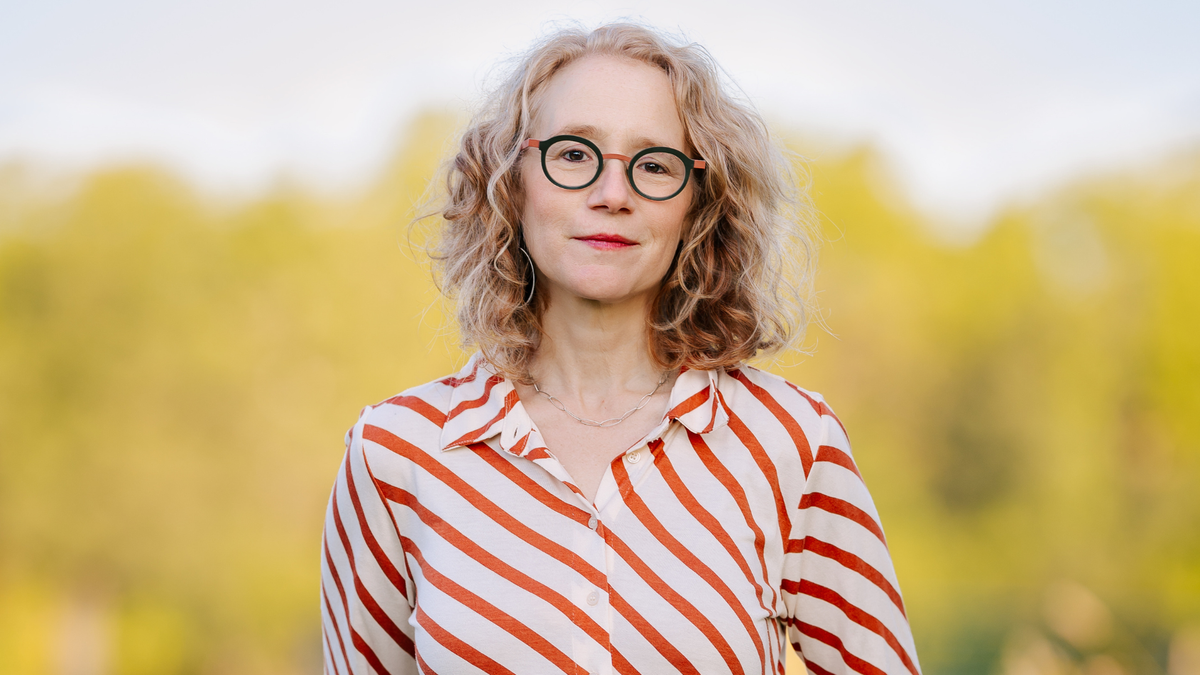
What makes a podcast great? Legendary producer Julie Shapiro shows us.
Today we go on a listening tour with audio legend Julie Shapiro, who has helped define what radio and podcasts could be over the past 25-plus years. Shapiro co-founded the Third Coast International Audio Festival, one of the most prestigious and influential awards in audio. She was a longtime executive at PRX Radiotopia, home of shows like Song Exploder, Kitchen Sisters Present and Everything is Alive. She helped launch and executive produced narrative podcasts such as Ear Hustle, first recorded inside San Quentin State Prison. Her shows have won Webby awards and Signal awards and been nominated for the Pulitzer Prize.
In this episode, host Mack Hagood plays stellar moments from Julie’s long history in audio and asks her to elaborate on how they were made and what made them great. They also discuss the current industry retrenchment, where budgets are shrinking and low-ambition video chat shows are redefining the very meaning of the word podcast. It’s an illuminating conversation that will appeal to fans and have audio producers taking notes.
Finally, Julie discusses her new project with partner John DeLore, Audio Flux—a platform and podcast for short audio pieces that is inspiring fantastic new works from around the world. The Audio Flux Podcast was just named by The New Yorker as one of the top 10 podcasts of 2025. In this episode Julie announces a call for new works that Phantom Power listeners might want to respond to!
Transcript
Intro: Spectrevision Radio.
This is phantom Power.
Mack: Welcome to another episode of Phantom Power, a podcast about sound. I'm Mack Hagood. My guest today has helped launch some of the best podcasts and podcast brands in the industry. In the year 2000, Julie Shapiro co-founded the Third Coast International Audio Festival, one of the most prestigious and influential awards in audio, it pushed boundaries and launched careers.
Julie Shapiro was also a longtime executive at PRX Radiotopia. Home of shows like Song Exploder, kitchen Sisters Present and Everything is Alive. She personally executive produced a number of shows that helped define the high quality narrative podcast such as Ear Hustle.
She's made a podcast series with Damon Krukowski of Galaxie 500 and Damon and Naomi Fame. Her shows have won Webby awards and Signal awards and been nominated for the Pulitzer Prize. She was involved in the early careers of podcast legends like Roman Mars and Jad Abumrad. She's guided audio production at the Australian Broadcasting Company in Candaland.
Unless your household contains someone who works in radio or narrative podcasting, Julie Shapiro is probably not a household name, and yet over the past 25 plus years, she has helped define what radio and podcasts could be and helped shape what you've heard through your earbuds.
Today the industry is in a retrenchment where budgets are disappearing and low ambition video chat shows are redefining the very meaning of the word podcast, and as much as she loves the medium, that is just not a ship that Julie wanted to help steer. So she has turned away from executive roles in corporate podcasting, at least for now. Choosing instead to work as a consultant, helping to deliver indie shows and new talents that she really believes in.
Also with her partner, John DeLore. She has launched Audio Flux, a new platform and podcast for short audio pieces that is inspiring fantastic new works from around the world. The Audio Flux Podcast was just named by The New Yorker as one of the top 10 podcasts of 2025.
I am gonna run two episodes with Julie. In two weeks, Julie and I will talk about how technology and culture have changed the environment for creative people and how to maintain a creative practice in an algorithmic world. But in today's episode, we're gonna listen back to Julie Shapiro's career auditioning clips from her shows and works that she's midwifed, and I wanna try to hear these works as she does. What exactly does an executive producer do, and how can they tell a new show has the potential to prick up our ears?
Finally, we'll talk about Audio Flux, and Julie will fill you in on the new call for three Minute works that just dropped yesterday. We're hoping that you will submit something. Those of you who are listening to the member's version will also get an extra 25 minutes of this episode with two extra clips that we could not squeeze in, and they are really good ones.
You can find out more about becoming a member at mackhagood.com. That's also where you can sign up for my free newsletter, where, among other things, I'm doing some writing on what a podcast actually is in 2026. That's mackhagood.com. Alright. here's Julie Shapiro.
Julie, welcome to the show.
Julie: Thank you. After listening so much. It's really, really nice to be here.
Mack: Oh wow. Well, I'm, I'm really, flattered that you gave it a listen. you know, one of the earliest guests we had on this podcast was Lawrence English. And he, you know, could have called himself a sound artist or a field recordist, or a label owner or any number of things. but he told us he was a professional listener.
And I'm just wondering, looking back at your own long and influential career, like how would you characterize what you do?
Julie: Yeah, I've sort of settled on career listener also, career listener because it, it seems to carry on from. Working in record stores and being very plugged into a music scene, from college onward to developing an appetite for storytelling and documentary work. And then. Sort of understanding the wide world of sound art out there and becoming a sort of careful listener, I think through music first, experimental music led to general curiosity about what you can do in sound through storytelling.
So, of all of the different things I've done, the listening's been kind of the through line through all of those things.
Mack: Well, I, like to do a walkthrough of, some of those moments in your career. But first I, I guess hearing you say that, I'm curious about the listening itself. So you have to listen a ton in your job. and some of our listeners are people who kinda listen for a living too.
And so I'm just very curious to hear about like, where do you do it? How do you do it? What do you listen on? Do you have a notebook with you? Like, tell me about listening for you.
Julie: My listening habits. you know, for years and years I just had music on all the time and I had encyclopedia knowledge about indie bands and tour dates and track listings on records and things. And then when I got more and more into radio, 'cause there was no podcasting at the time, all of that is sort of intel, data information moved into understanding producers and radio shows and, I helped run a competition for a while, so I would have durations in my head and I would think of people's handwriting when they submitted their pieces on an envelope when you used to mail things to enter an audio competition. I know it sounds like I'm talking about the dark Ages. It wasn't that long ago,
but, I listen constantly, so I usually have earbuds handy. and in between tasks or you know, all the ways people listen in daily life, doing errands or, being out in the world, taking runs. You know, I'm listening a lot at those times. Trying to split the difference between what I have to listen to for work and what I am listening to for my own enjoyment or edification or, sanity.
So less music than I used to, which I think about a lot and try, I am always constantly trying to get back to more music. but I'm generally listening to some kind of podcast or radio storytelling, you know? throughout the day.
And I used to keep lists of what I was listening to. cause I'm often asked for like end of year top tens, and it's helpful to have things to look back on. But I'm also trying not to track every goddamn thing I do in my life. I like making handwritten lists, but I've stopped, monitoring everything that I listen to. And so it's a mix. It's a mix of artful stuff and infuriating news and interesting storytelling and, you know, all the different ways, what you hear impacts your, your psychology. I'm usually mixing it up pretty much throughout the day.
Mack: Yeah. Yeah, I like that answer. So what I thought maybe I'd like to do today is listen with you to some things, maybe play a little game. So I wanna play some short excerpts of things that you've sort of helped bring into the world.
And then I'm hoping, you know, you can tell us what it is, but secondly, just help us hear it the way you do.
Julie: Oh, wow.
Mack: You know, like why did you select it or how did you help craft it? Or what memories does it evoke for you? That kind of thing.
Julie: Yeah. In the, in the words of my darling, 13-year-old niece, let's go.
Mack: Right.
Katie Mingle: The Dead Can't Do You Nothin’: Today, I'm here with Antonio. We both work here now doing post-Katrina Construction. He's telling me about the Day of the dead in Mexico in New Orleans.
They also celebrate the Day of the Dead, but it's called All Saints Day. The idea is the same, though. The family gathers around the grave to clean up and redecorate to talk about their dead, and remember. Sometimes they prepare a picnic and they even set a place for the deceased. My friend Antonio grew up in a rural area outside of Mexico City in the neighborhood where he grew up, if someone died, the men in the neighborhood had to bury the body in the family plot, eight feet down.
This is how it's done in New Orleans too. All the family goes in one plot, but here the graves are a shallow two feet, or the dead are buried in above ground tombs. Two feet. That's all you get before you hit water in New Orleans. The dead are close. They are very close.
Julie: Ooh, I feel a bit of a shiver actually. It's amazing. That piece is so deeply in my bones of, ear memory. Katie Mingle the dead can't do you nothing. The dead don't, do you Nothing.
Mack: The dead can't do you nothing. Yep.
Julie: Katie made this early on in Third Coast years and was awarded our best new artist award. And, this was an award that was meant to encourage new producers to submit and be recognized and honored. And it's really, awarding potential as much as it is awarding the pieces that they entered and. I remember, this piece blew our minds because of Katie's signature delivery and writing style. And, if I remember correctly, 'cause it's been a long time since I've heard it, it ends on a question, and I just remember being blown away by the unresolved nature of this piece, which really spoke to the unresolved nature of humanity, really. I mean, I can extrapolate and go big. it's also very place-based.
And just hearing the careful layering in that clip with Katie, narrating and the voice of her friend underneath, and then the music comes in, there was a real intention to play with how those sound was layering up. but hearing that takes me right to the scene of the cemetery where the rest of the story unfolds.
Mack: Yeah, it's got such a sense of place, and I mean, being a New Orleans native. Who does have a family tomb where, you know, everybody's bones go in there together eventually. I look forward to being there one day in the mix
Julie: yeah.
Mack: and remembering All Saints Day and, you know, clean the grave, put the fresh flowers like that whole thing.
It, you know, certainly meant something to me personally, but then I think even if I didn't have those reference points, I would feel this sense of place from. I don't know, the way she constructs the scene, it has something to do with the writing. As you say. It has something to do with the layering.
Yeah, and there's a lot of characters in here too that, that like it because it's not a long piece, but we meet several different characters who are really, really interesting.
Julie: I think it's like 12 or 13 minutes. And, one of the characters is someone else who works at the cemetery and who is clearly not that excited that Katie is there.
Mack: No.
Julie: And the way that that comes across and the writing and little bit of tape that's used, it's very efficient and succinct, but also playful. And, you feel like you're on this exploration with Katie throughout the piece.
And I love that you have your own personal connection to the content 'cause it speaks to really why it's so subjective listening, like, what invites one to respond in a certain way has so much to do with what you bring to the listening experience.
Mack: And I think there's also, like an understated, implied attention to like racial difference and class difference in this piece That, and she never says anything about that.
It's like, what is this little white girl doing here in the, what do they call it, like the pauper's cemetery and, you know, the whole thing is so many layers of New Orleans, it's post-Katrina.
Julie: I was just gonna say, it's also I love that, mile marker. I mean, when we talk about how these stories can document what's happening around us, they don't have to do that directly. Sometimes it's just a line in a script that roots you in a time and a place. So effectively,
Mack: Yeah. So as you kind of mentioned, this was a piece that came forward as a submission to the Third Coast Audio Festival, which you founded in 2000. You were the artistic director there for what, more than a decade. Right.
Julie: I think I was there for close to almost 15 years by the end.
Mack: So what were you trying to achieve with this festival?
Julie: Oh, with the festival? Well, I happened to move to Chicago right when Johanna Zorn, who was based at WBEZ, was starting it up and we met like at, I can point to the corner in the radio station where we met and I was working in a record store, which was what my sort of fallback to do wherever I lived.
Mack: Which, which records store was it?
Julie: Reckless Records on Broadway
shout out to Reckless.
Mack: Great record store.
Julie: And started part-time and then quickly went full-time with Johanna and we built this festival from ground up and it was really meant to celebrate, recognize, encourage, inspire, and honor the work that had been done, that could be done in audio and radio.
at the time there was no podcasting. It was all radio. it was drawing from a long tradition of. independent radio production and we were just trying to pull the community together, build an engine for networking and skill sharing and really celebrating the best of the best work being made by this community.
Started more nationally, but then quickly became very international and that became a real hallmark of the festival and something I was very devoted to was trying to get out into the world, invite people back, and to start listening to what people were doing in other countries.
Mack: when I started thinking about, your career and, and then sort of looking back on it in preparation for today. It made me realize how important WBEZ in Chicago was to my own life as a listener and as somebody who eventually went into sound studies, like that radio station trained me up in a lot of different ways.
Gave me a sensibility about what sound could do, what sonic storytelling is, it was the home originally of Ken Nordine's Word Jazz.
Julie: Absolutely.
Mack: but it was also the place where I first heard This American Life and Radio lab and you had a show that was a big influence on me, a spinoff of the Third Coast Festival called Re:sound, where you guys would curate the best pieces that came out of that festival.
Julie: Yeah, so we ran a competition and we ran a conference, but we also featured work on the website. Back then, it was really a big deal to introduce people to work from all over the world. It was not easy to zing files around and stream things and I mean, so it would take sometimes. I don't even remember the word for it. You put the CD in and you burn the CD. No, no. You import the cd.
Mack: Oh yeah, like ripping, ripping CDs.
Julie: Ripping, we were ripping CDs and then making big, enormous, clunky audio files and, but you know, technology caught up fairly quickly and the whole digital age came roaring in.
And so it became easier to share work from all over the place. But yeah, Resound was hosted by Gwen Macsai and a fun fact is that Katie Mingle who won the best new artist award she has had an incredible career ever since and she was gonna do this anyway, but I do think, you know, winning the award and getting some recognition help Katie ended up producing Resound a few years later, came on board with Third Coast and worked for a long time and then has worked with Serial, worked with 99% Invisible for a long time. Roman Mars, who started that show, also worked at Third Coast and produced Resound,
Mack: Crazy.
Julie: Delaney, who still works with Roman.
We were all, we were a very small, tight knit. crew for a long time over at Third Coast. but I love that through line of Katie winning, producing with us and then going off and continuing to have a beautiful career.
Mack: Yeah. That's amazing. All right, let's listen to another one.
Julie: Please.
A Field Guide to Gay Animals: A little trigger warning. There'll be a lot of reference to mounting today that male ram is mounting another male ram, and now he's doing it again, and now he's doing it again. Nature cookie mounts wave is so gay. Cookie mounts wave again. So why don't more people know this? I've got a gay rooster named Francois.
I was gonna say Rumpy Pumpy, please say Rumpy. Pumpy, please say Rumpy. Pumpy. I'm Owen Ever. I'm Laine Kaplan-Levenson, and this is a field guide to gay Animals, a podcast about queerness in the natural world. We're traversing the animal queendom. Males do mount each other and they frolic with erection to understand why something so abundant is so often dismissed and forgotten.
They just don't like queer ducks in Wisconsin. Is bulls gay? Can animals be actually gay? The animal kingdom is queer and we are a part. Find a field guide to gay animals on Spotify, apple, or wherever you get your podcasts.
Julie: Well, that I know by heart and that is very fun to sing along to as I hear it. that was the trailer for A Field Guide to Gay Animals that I had the pleasure of making while I was with Candaland for a spell, to make a few narrative podcasts and Laine and Owen and the wonderful team Katie and Nathan. Small team pitched this show and we just all fell in love with them, so charming as a unit and as a team. And they were really like determined to tell this story about gayness in the animal kingdom and how it's been sort of shut out. And there's been a lot of drama in academia around texts that are written about all of this.
And so, They wanted to make a sound rich, charismatic, host driven show that also had a little bit of science, a little bit of philosophy, and a lot of just like adventure. It really is like a great rollicking podcast, that I highly recommend if listeners have not heard it yet.
Mack: Okay, so I have so many questions about this and I'm super psyched to hear that you made the trailer because I think this is one of the very best trailers I've ever heard. Like, it just, it just brings joy.
Julie: Well I should say, I just like listened, gave feedback, and, you know, someone else stitched it all together.
Mack: I wanna ask, first of all, like. I think this might be a good place to break in and ask, like, what does, I assume you were the executive producer here, so what does an executive producer do in the world of radio or podcasting?
Julie: I've decided to be comfortable with sort of that being a role that I returned to. I think it's a catchall for a lot of things in the different creative processes, and I think every team's a little different. I mean, there are descriptions at big companies for what an EP does, but what I have found, I was executive producer at Radiotopia of the whole network and of the Ear Hustle podcast when it started, and of other podcasts since, and right now I'm EPing a narrative podcast about pancreatic cancer. So, the role fits because it kind of means broadly supporting producers, giving feedback, thinking about the details, pulling the big picture together while the team is working on the littler picture, the work. but also giving an ear, giving fresh ears to something a team's been working on and workshopping, you know, I can come in as more of a listener, proxy listener, and give advice. Look at the big picture, how is a show shaping up over episodes versus within one episode?
So, for narrative series, I think it's a kind of continuity coach in a way, like working on temperament and consistency of tone and balance of tape and narration and script and sound design. I feel like I'm a QC person, I'm just looking at the big picture also keeping an ear on the details too. but it's sometimes a go-between with other administrators or, up the chain. Down the chain. You know, I'm sort of there to kind of pave the way and just understand what the creative force in the project needs to do their best work, I would say.
Mack: What about conceptualizing what the podcast is because there's a difference between a topic and a show, right? A show takes this topical area and then gives it a point of view, a perspective, and like when you just listen to that trailer. It's so joyful, it's so funny, and yet it's also so smart and, curiosity driven.
Like you just can't wait to listen to it when you hear that trailer. And yet I can imagine very, very easily a lesser show that someone could have made about these controversies within science over whether, you know, queerness is, biological or cultural, right?
That would be for an academic, like myself, the obvious way to frame this show and that show would've sucked.
Is that Part of what you do is help think through like, what do people actually wanna listen to here?
Julie: Yeah. Well, part of what I do is believe in the creative intentions that brilliant people have, and so it's partly being able to support. that a team has. I mean, this wasn't my idea for a podcast, but I did read the pitch and say, oh, this is really special. and convinced the folks at Candaland who also saw great value in it that we should invest in this show and, and make it with them. so it is sort of keeping an eye on the larger impact of this series and also attending to the individual creative instincts that the team has and trying to keep everyone sort of going in the same direction. But this team brought so much of what you hear, the personalities, the love of sound, the desire to do something that, you know, I think of the term form and function a lot. Like we couldn't make a dry, boring podcast about this electrifying, incredible personal topic to the team. And so, I was just helping guide, shape, encourage or pull back, or discourage sometimes. Um, and it's just a mix. It's like cooking almost.
You have all the ingredients you have to know how to put them all together, to sustain a story over multiple episodes. But yeah, it could have been done differently. There are some experts across the show. There are also artists and I think the hosts, Owen and Laine, we have a, a NPR reporter and a, I mean, Owen is just, what doesn't he do?
He's like. A clown that goes into hospitals and he's worked at a apothecary, speaking of New Orleans, like a Museum of Apothecary. Like he's a performer to the core, you know, and we had to showcase that, and he and Laine didn't know each other well beforehand, but like were fast friends, and spent a lot of time together making the show. one thing that I was really proud of and you know, maybe to a fault, is that we wanted to start as many episodes as possible with natural sound and with scenes, get out of the studio, and part of this was like, about the world. We had to get out into the world and record things.
So it, opens with some would say challenging tape, 'cause you don't know where you are, you don't meet the host right away. It's an extended scene. We did cut it back. It was longer even. It's probably still too long for some people, but. You know, so sue us. I don't know. I, you, we could, the, the point was to also embrace the medium and do what we could with audio, and so it starts with them watching birds in, Central Park together, like meeting up and I don't know, it's, I, think of every project has a slightly different mandate and, and desire about for what it wants to be. And part of being an EP is sort of reading the tea leaves and know, understanding how long to steep them for and you know when to pour the kettle, if we can torture this metaphor a bit more.
But it's all, I mean, I think that's why I love it. 'cause every project is so wildly different, one to the next.
Mack: Okay, let's do another one.
Ear Hustle Ep. 7 Unwritten. 9:47-11:07ck: Yeah, man, my boy Drew is a extravagant, real cook man. He makes something outta nothing, not all the time. Right. And he's the one that usually does the cooking due to the fact of the, uh, the politic, uh, uh, situation, right? Politics. That's how guys refer to those unwritten rules about race that we're talking about.
And some of the rules have to do with food. So if he gives me, uh, packaged food or whatever pouch food, whether if it's macros, salmon be taken over there, it's still sealed in the pack because this is, uh, a law where it's okay as long as I give it to this other race sealed because it's not open, so therefore it's not tainted.
Right? He can't help. Me, uh, you know the blacks, they can't help you cook it. It just doesn't work that way. God. Okay, so let me get this straight. So if one race gives another race an open package of food, that other race won't eat it because it's tainted. That's the prison politics. Okay. It's tainted because it's opened, right?
Okay. But say that AR gives Drew a sealed, unopened package of meat, then Drew can cook with it and other white guys will eat it. Yep. Okay. Who makes up these rules? Where do they come from? I don't know. These are the rules that were in place before any of us got here.
Julie: Well, my two, two of my favorite, favorite, favorite humans and podcasters on the planet, Nigel Poor and Earlonne Woods. Of course, that's an Ear Hustle clip. From, I think an early episode, I mean, there's been so many, but this. Exemplifies what the podcast is for.
Ear Hustle exists because it won a contest that we ran at Radiotopia called Podquest, naming things is fun, Podquest, where we invited anybody with a podcast idea to pitch it. And the prize was you could be possibly become a Radiotopia podcast. and so we got 1,537 entries. This was back in 2016. was one of the first things I did on the job at Radiotopia was run this contest. And we had 10 finalists basically. And ear hustle out of all of the submissions really had the idea that had to be made. Like we had nine other excellent ideas from talented people. But this idea of telling the stories of daily life in prison from the inside, was something we'd never heard. We didn't know how it would work. they sold us on a trailer that promised like no Hollywood bullshit, but the real deal. And it really is all about relationships, starting with the relationship between Nigel and Earlonne, which has become a famous relationship in podcasting and in the world, in the 10 years since that show started.
So, they talk about the details, again, the details of life inside from the perspective of incarcerated people at San Quentin State Prison.
Mack: I mean, it's such a remarkable show. It's so humanizing of the people in prison. It's also just absolutely fascinating. Like so information dense in the sense of like, just in that clip I played, and I mean, it is kind of just typical of the show really is that there's so much going on.
There's like lingo that we're learning like that the race relations within the prison are called politics. Like that's the word they use. That there are these rules around food and, what race can share food in what way with another race. And at the same time. It's so skillfully done because Nigel is sort of like a stand in for the outsiders, even though she's worked in the prison a long time.
But she does a great job of like sort of pretending not to know some of these things and.
Julie: Yeah, maybe it's important to say. Nigel a volunteer at San Quentin who, was teaching photography and storytelling and, met Earlonne, who is actually at this point an incarcerated person at San Quentin. And so they really are hosting, writing, making the show from inside the prison based on stories that Earlonne and the rest of the inside team is hearing about and bringing guys into the studio to record. and there's a lot about ear hustle that's about this contrast or dichotomy because you have this white woman coming into a largely black population on the inside, but of course not all black. but man and woman inside out black and white, they're really opposites in a way. And for some reason, that's the chemistry that also. propelled the whole podcast from the beginning, so.
Mack: It is such great chemistry. Although a little bit odd now because there's like, you know, contemporary ads that even if you go to the back catalog that are getting dropped in now, and like they're talking about like Quince, uh, you know, like that clothing maker, that
Julie: Cashmere hoodie, yeah..
Mack: Cashmere hoodie maker that sponsors all podcasts now.
And it's like, a bit jarring. You're like, whoa. Well, okay. Why not? I don't know.
Julie: But this is in the weeds a bit, but for the first few years I did the ads for the Ear Hustle podcast. 'cause we didn't want that sort of, disconnect to happen when it would switch from ad to show. And then without giving too much away, the situation of the show changed. And so we felt like, okay, it's a little bit more reasonable now for Nigel and Earlonne to take care of this. They have a blast. Doing the ads, it's clear, it makes the companies very happy and they're very successful ads.
But i agree it is a real disconnect to go from like talking about solitary confinement to a Casper mattress, you know, that, was always a like head scratcher, of what to do with. I always fell back on, you know, I was very involved with this show from the start, ran the competition and just was, had been EP from the start with it and figured out how we were actually going to make it happen from San Quentin. They don't have a printer. we couldn't communicate when they were inside the prison, so they would do the work and then we'd work on it on the outside and all of that stuff. and so watched it evolve and watched it build on it, build a community and engage with so many listeners.
And it's really become a cultural force that none of us knew what to expect. But I think they have this recurring, came up in one show where the reality is bigger than the dream and Fans are crazy, they do all sorts of things for Ear Hustle and send them things and someone stitched that onto an embroidery that phrase and it really has become a phenomenon. In other countries too, they've toured the world, they've talked to people in other countries. Now they're working in Southern California at a women's prison as well. 'cause the majority male voices for the first few years at San quentin.
Mack: yeah, if, anyone listening hasn't checked this podcast out,
Julie: Start from the beginning, there's a very cool plot twist a few seasons in, and it's still going. And I, say this all whenever I can, they never rest on their laurels. That show keeps evolving and experimenting. And they'll never run outta story ideas. And that's also a small but mighty team that really brings you inside through sound. And the sensibility is really, one of curiosity and exploration. These aren't redemption stories, these aren't stories about the evils of the criminal justice system. You get all of that, but they don't have to tell you that that's what it's about. Therefore it's really just a story about humans living under certain conditions and how our society thinks, treats, and reacts to them.
Mack: Yeah. Yeah. Well, and I should say, I've been playing things, not in order of your career for folks, but just kind of skipping around, but I do want to end with something more recent that you've been working on. So let's take a listen to this.
Red Card by Vivien Schütz and Laura Rojas Aponte (AudioFlux): The cards, the ones that we make are about the size of a business card, about two inches by three inches, sort of a heavy piece of red paper. And since January we've made 110,000 of them. I tend to carry a stack of cards with me, usually in Spanish because that's a second language for me. I will hand them to people and say in Spanish,
this is about your constitutional rights. There's information on what to do with immigration, with the police, with whomever. He gave us cards week by week that we put on display at the market. Most of the people that would come by take 'em, especially the Hispanic community. And others would actually take it to give to others that they knew.
It says, I do not wish to speak with you, answer your questions or sign, hand you any documents based on my Fifth Amendment rights. You now have that card on you. No. What By law will protect you. I do not give you permission. I do not give you permission to enter my phone to enter my home. You come to this country for a better life once you are able.
To apply and to the legal status, you then do it. Applying is a very costly process, but my folks, they had applied. If it wasn't for us doing that, we wouldn't be able to be selling flowers in New York City seven days out of the week and put 26 people on payroll because of two people going across the border for their family.
Julie: So that is part of a three minute story called Red Card. Produced, not by me, by Vivien Schütz and Laura Rojas this new project that is the love of my audio life called Audio Flux. And this was produced, last year, last fall, in response to a theme and some prompts. So what Audio Flux does, it's a platform for short form, innovative audio and bold storytelling.
That's our little tagline. and what we do is twice a year we invite people to make three minutes stories Inspired by a theme and some prompts, and each time we partner with a creative partner outside of audio to come up with the theme and the prompts, so we're working with artists in different fields, as a starting point. And so we're just hoping to inspire people to make 3-minute stories, do something they can't do in their day to day if they already produce. Try something for the first time, explore their own lives, communities, families, friends, strangers around them through audio. but with this invitation to do it, with some parameters involved. And Red card was made in response to a theme of creative tension. That was our Circuit six theme.
Mack: And I kind of cut it before we get to a pivot that really brings out the tension. So I apologize for that.
Julie: Well, good to leave people wanting.
So it's an interesting way to kind of get into audio flux, but, With this theme of creative tension, we were working with a radical knitter named Lorna Hamilton who has been referred to as the Banksy of knitting in the fabric worlds.
And so, really brought an active, voice to her artwork through knitting. and a very observant voice, and she knits often about things happening in the world around us. So we wanted to bring some of that energy, to this moment, you know, how does art meet this moment in reality? And so it's up to the producers to interpret the theme and the prompts however they want to. But I was really hoping, some would take on this moment in ourselves that as artists and creators and what can we do? and so you hear the printer of the card at the beginning and then at the end as well where he comes and says, you know, this is all I can do right now is make these cards and send them out into the world.
Is it enough? None of us know. All of us wanna do more. But, I think this piece. Did such a beautiful job of documenting, from people receiving these cards, that aha moment when you realize you're gonna hear different people reading it, different voices. I love that moment, as a listener, but really respect what this piece does to hold up a mirror to what's happening around us politically.
Mack: Yeah, it's really incredible to listen to a lot of these Audio Flux pieces and see how much can be done in three minutes.
Julie: Yeah, it's a magic duration in my opinion. 'cause it's, just long enough. You really can do a lot. You can tell a full story. but it's not so long, it's not daunting. The stakes are very low. The reward is very high. You can listen to many of them at once and hear the prompts play out in different ways across circuits. yeah, it's an interesting exercise in like critical listening as well as production. and all genres are acceptable. We have like no rules about the kind of stories that can be told. So we have every genre under the sun has been submitted.
We now have over 300. short works that have been made in response to the audio flux circuits. and you know, I feel like people have invented genres and then made and sent us submissions that showcase brand new forms even. So it's been very gratifying. and we're really an engine for the audio community to come together around something, and find a. cultural touchstone as sort of a shared cultural experience as the industry goes bananas around us.
As everything gets longer and less imaginative and more predictable, we're just trying to sort of plant our flag and be here for the people who are interested in audio for the sake of audio. alongside all of that, because I'm a big podcast fan, I care about the industry, all of those things, but we're trying to build a space that can be yes, and. We have a podcast too, but it's really a mindset as much as anything Audio Flux.
Mack: And you were just listed as a Top 10 podcast by the New Yorker in 2025.
Julie: Why yes we were. Thank you for, for mentioning that. We're so proud of that. along with our friends at Signal Hill, another sort of experimental audio magazine that has come out in the last couple years. I think there's a recognition that there are other ways to work with audio and to listen to audio. and we feel like we're part of a movement, I upgraded from like a renaissance of creative audio to a movement last year because there are so many of these smaller projects all supporting each other and sharing information to each other's communities. but yeah, that was great and it put us on a lot more radars, which means more people will listen and hopefully more people will try to make flux works 'cause it's an ongoing opportunity. and it felt, great for some validation to say this, matters even in the mix of all these other podcasts that are huge and celebrity driven or made by big studios with lots of money. independent works are, unto themselves like very special, very meaningful, and can have impact.
Mack: Well, and you know, I think within the Phantom Power audience, we have a lot of audio producers, sound makers of various stripes, and also a lot of teachers from high school level to college level who often teach, creative listening and creative audio. So is there a way that our listeners could get involved?
Julie: Well, let me think. Uh, yes, there is.
Mack: We're so smooth.
Julie: yeah, no beautiful segue. I will say that, um, in the last year we've really been thinking about Audio Flux as a curriculum, as a teaching tool, as something that can be shared in a classroom and inspire students coming into audio to think a little bit more expansively about what they can do with their newfound skills as they develop.
We have just launched Circuit seven, which has a theme of trash or treasure. every one of your listeners would be welcome to submit a piece. our creative partner for Circuit seven is a Kenyan visual artist named Cyrus Kabiru, and we met Cyrus through our organizational partner first time ever for Audio Flux.
We're on a circuit with another organization, but there's a fantastic organization called Radio Workshop that's out of Cape Town and they're training young audio curious African journalists to tell stories with sound. And so together with Radio Workshop we found Cyrus and we are inspired by his artwork to come up with the theme trash or treasure because we are specifically inviting climate stories this time.
We really wanna, like, head on encourage people to tell different kinds of climate stories than we're used to hearing. Cyrus, all of his materials are sourced from dumps and dumpsters, trash bins. He gives discarded objects a second chance and makes very beautiful objects out of, these, you know, to some people. Would be considered trash. And so with that in mind, we're thinking about the environment. We're thinking about how the world's changing. We're wondering what are the stories that haven't been told yet, that anyone can tell. Not just the scientists, not just the investigative journalists. So, circuit seven is open right now.
People have till April 6th to send us a three minute piece. The theme is trash or treasure. The prompts are to tell us a climate story that is meaningful for you. Incorporate a sound from Cyrus's Studio. We have 5 different clips that you can hear on a folder if you go to the audio flex website so you can download and incorporate one, or you can incorporate all five, literally or not into your story. They can be remixed, they can be fed through filters. They just have to show up, and we ask you to incorporate a discarded object that you have found or will find into your story somehow. this can be a main plot point. It can be a, as you we were talking about earlier, just like a side thing that is noticed or, comes up.
But we do want people to think about the things around them that are often discarded, but might have value or inherent meaning in other ways. and so that's, that's it. It's simple, right? Just three minute stories. Any genre, just, have to reflect the prompts and respond to the theme.
Mack: yeah, I love it. I love the constraints there because that's so freeing to have, some, boundaries to work within. I find.
Julie: Absolutely. I should say Audio Flux is deeply inspired for me for by two sort of, Artistic references. One is the Oulipo French literary Movement, which really plays with that idea of creativity through constraint and the mathematics of semantics.
And the other is the Fluxus art movement, which has been a big inspiration for me all along. It's right there in the title, but hopefully in the attitude as well, which is, you know, about a, lot of things. But primarily for me that sort of, flipping the script on what art is or what audio storytelling is. Breaking some rules, irreverence, playful, but serious about things, serious about the value of making things in the world, and subverting expectations about what art can be. So, we are not the first to play with this idea, and we are very indebted to all of the, amazing artists who have come before and proven that this equation, this formula for me always works to invite people to get creative and help them by giving some, constraints or parameters.
Mack: Well that's excellent. And it actually sort of points a finger towards something I'd like to talk about in our next episode together, which is sort of about creativity in our current moment and the state of the podcasting industry in general, but also just thinking about how technology has shaped and influenced like what it means to be creative. So, I hope folks will catch up with us again in the next episode for that conversation. But for now, thank you so much. This has been fantastic.
Julie: Ah, thank you for playing name that audio piece with me. it is really remarkable, like old, favorite songs to hear these clips and, sing along with them in my head while I listen. So thank you for that experience. I.
Mack: Yeah. Yeah, my pleasure.
And that's it for this episode of Phantom Power. Huge thanks to Julie Shapiro for being on the show. You can learn more about her and her consulting at listeninging.com, that's listeninging.com. You can also learn more about Audio Flux and the new call for works at audioflux.org. By the way, it's free to enter, you retain ownership of your work and you might even win a cash prize, so please check it out.
You can learn more about me and what I'm up to at mackhagood.com. That's mackhagood.com. That's also where you can become a Phantom Power member. Buy some pretty dope looking merch, or just sign up for my free newsletter on our sonic world and how to live a richer life through listening. mackhagood.com.
Today's show was edited with care in the United Kingdom by Cameron Naylor. I'll talk to you in two weeks. Yeah, we're stepping up our cadence. Talk to you soon. Bye.
Media Cited
Audio Showcase:
Katie Mingle - The Dead Can't Do You Nothin' (Third Coast Audio Festival)
Owen Ever & Laine Kaplan-Levenson - A Field Guide to Gay Animals (Canadaland)
Nigel Poor & Earlonne Woods - Ear Hustle (Radiotopia/PRX)
Vivien Schütz & Laura Rojas Aponte - Red Card (AudioFlux)
Julie Shapiro & John DeLore - AudioFlux
Radio Shows/Podcasts:
Hrishikesh Hirway - Song Exploder (Radiotopia)
The Kitchen Sisters - The Kitchen Sisters Present (Radiotopia)
Ian Chillag - Everything is Alive (Radiotopia)
Roman Mars - 99% Invisible (Radiotopia)
Sarah Koenig - Serial (Serial Productions)
Ira Glass - This American Life (WBEZ/PRX)
Jad Abumrad & Robert Krulwich - Radiolab (WNYC)
Gwen Macsai - Re:sound (Third Coast/WBEZ)
Signal Hill (Audio Magazine)
Organizations/Festivals:
