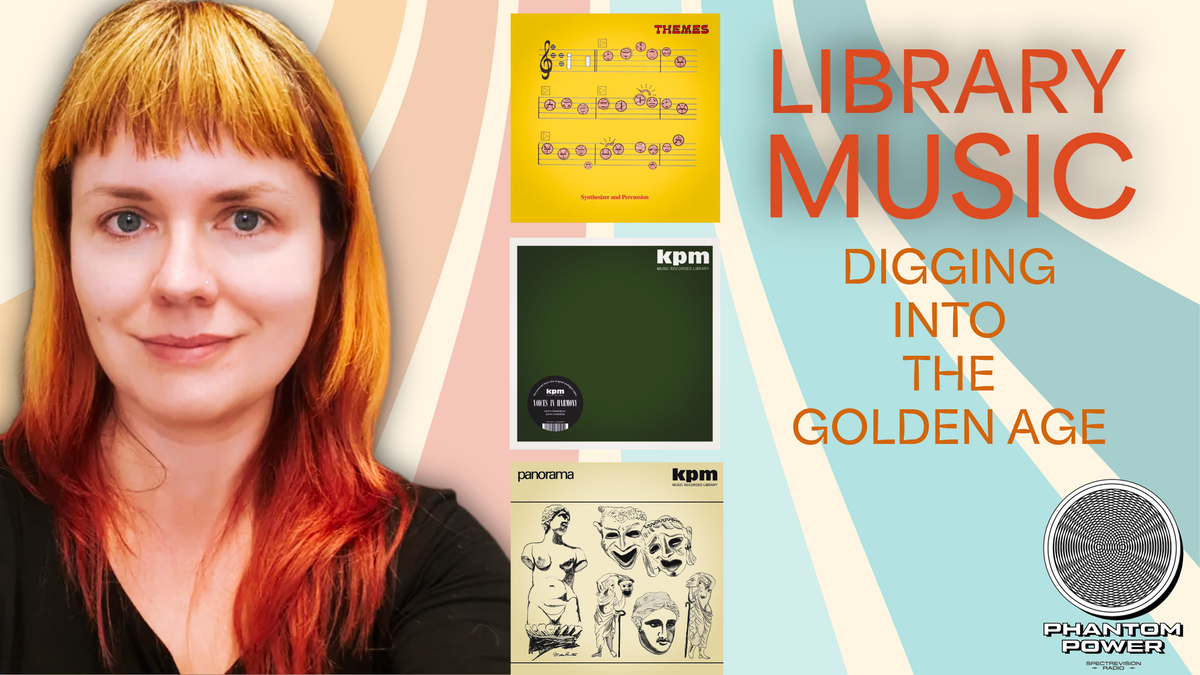
Anonymous Sounds: Library Music
Today, we look at some of the hidden labor that creates the ubiquitous music that we hear all around us.
Today we talk to Nessa Johnston and Jamie Sexton, co-editors (with Elodie A. Roy) of Anonymous Sounds, Library Music and Screen Cultures in the 1960s and 1970s. It's the first scholarly book that takes a comprehensive look at the early off-the-shelf music industry that soundtracked TV, movies, radio, and commercials and it argues that these anonymous individuals had a major collective impact on the music of the era.
This show is part of a series of occasional episodes and newsletters about the roles that music and sound play in public space.
Nessa Johnston is lecturer in screen studies and digital media at the University of Liverpool.
Jamie Sexton is associate professor of film and television studies at North University.
If you'd like to hear the full version of our conversation, including their reading and listening recommendations, you can become a member at http://mackhagood.com.
Cited Media:
Articles / Essays:
Anahid Kassabian - "Ubiquitous Listening: Affect, Attention, and Distributed Subjectivity" (2013)
Philip Tagg - writings on library/functional music
Books:
David Hollander - Unusual Sounds: The Hidden History of Library Music (2018)
Simon Reynolds - Retromania: Pop Culture's Addiction to Its Own Past (2011)
Films / Documentaries:
Music:
Luciano Michelini - Frolic (1974)
John Pearson - Heavy Action (1974)
Barry 7 (of Add N to (x)) - Connectors series
Podcasts:
Transcript
Intro: SpectreVision Radio
Nessa: With music and the kind of romantic idea of the genius composer who kind of works for two years on one little string quartet, it really runs counter to library music, which was sort of composed, arranged, and recorded really, really quickly.
and in a sense, in this sort of very industrial fashion where it's more like sort of dress making or manufacturing almost, you know?
Intro: This is Phantom Power.
Mack: Welcome to another episode of Phantom Power. I'm Mack Hagood. at the outset of the 21st century a scholar named Anahid Kassabian published an essay on all the music we hear, but never choose nor actively even listen to film and television music, music on phones, music in malls and stores, music in video games, music for audio books, music and parking garages.
Kassabian was interested in what all of this unchosen, ubiquitous listening was doing to us as people. " Whereas we are accustomed to thinking of most musics in terms of authorship and location" she wrote "this music comes from the plants and the walls and potentially our clothes. It comes from everywhere and nowhere. Its projection looks to erase its production as much as possible." She wrote "posing instead as a quality of the environment."
I thought of Kassabian's work several weeks ago when I read a recent feature for New York Times magazine reporter Ryan Francis Bradley explored the world of sync music or music that exists to be paired, synced with video. "Today's music is treated like a free flowing utility" writes Bradley. It's added to spaces the way air conditioning is providing the right vibe for TV shows, YouTube tutorials, stores, study sessions.
Where Kassabian was interested in how this functional music affects our listening and consciousness. Bradley is more interested in the musicians themselves. " Many of today's musicians, instead of selling records", he writes, "operate more like the people who once played the piano in department store lobbies, the organ at baseball games, or the accordion in 19th century cafes. Their job is to provide appropriate background noise for some other experience."
Bradley estimates that the vast majority of the music industry, perhaps 90%, actually consists of this kind of functional music. We tend to think about the music industry in terms of stars, but most working musicians are really toiling away in these anonymous roles that defy our romantic ideas about musical authorship In the coming months, I plan to do a series of occasional episodes and newsletters about the roles that music and sound play in public space. Today I wanna look at the hidden labor of the people who make the ubiquitous music that we hear all around us.
And in order to do that, I'm speaking with Nessa Johnston and Jamie Sexton.
With their co-editor, Elodie A. Roy, they've released a new book called Anonymous Sounds, Library Music and Screen Cultures in the 1960s and '70s. It's the first scholarly book that takes a comprehensive look at the early off the shelf music industry that soundtrack, tv, movies, radio, and commercials. And it argues that these anonymous individuals had a major collective impact on the music of the era.
Nessa Johnston is lecturer in screen studies and digital media at the University of Liverpool, and Jamie Sexton is associate professor of film and television studies at North University.
If you'd like to hear the full version of our conversation, including their reading and listening recommendations, you can become a member at mackhagood.com.
That's also where you can sign up for my free newsletter. On sound and listening, find Phantom Power Merch. Listen to our back catalog and more. That's mackhagood.com.
All right. We are here with Nessa Johnston and Jamie Sexton, who are co-editors with Elodie A. Roy of "Anonymous Sounds: Library Music and Screen Cultures in the 1960s and 1970s".
Jamie: Hello.
Nessa: Hello.
Mack: So we're here to talk about library music, and as you astutely point out in the introduction to your book, a lot of people have no idea what library music is, so can we start off by just defining it? Jamie, do you wanna take a crack at it?
Jamie: Sure. So library music, I would say, is basically music that is produced, with the intention of it being then licensed to be used in media productions. So it's different from the score. So a lot of more prestigious productions have custom-made scores, but this isn't, like, made in conjunction with idea...
Well, it is ideas, but not a specific picture. So basically, library music companies produce a lot of music according usually to moods or styles. This is where the, the library comes into it. So they store store this big library of music, and then all of this music can be used by anyone in their media productions.
Nessa: Yeah, I mean, I think, as well as film and TV and games and so forth, traditionally and still now, it's used a lot in advertising and newsreels and industrial films and training videos. and I think, as media scholars, that's what makes it particularly interesting to study because it's associated with sort of forms of media that maybe aren't considered particularly artistic.
But that there's been more interest in kind of aesthetic or historical standpoint
Mack: It is interesting to think about music as this kind of infrastructure that's helping move commodities as well as, like, narrative films and all kinds of things, that it's just sort of like this background sound that is doing all kinds of work that maybe we don't really notice that much.
You mentioned in your introduction that, you know, library music has a prehistory. Nessa, do you wanna talk about, like, the roots of it?
Nessa: Yeah, I mean if you look at some of the oldest and most established, library music companies like, De Wolfe and Boosey & Hawkes in the UK, they actually started out before the advent of sound on film in the late 1920s, as publishers of sheet music for live scoring of films and newsreels and so forth.
So that was the business they started in, and that kind of music performed the same function. It was music to accompany film, but it would've been played live by the kind of in-house orchestras of movie theaters. And then once you moved into sound on film and sound on disc, that was when these companies started commissioning recordings of library music or stock music that would then be used in films.
And then as well as that, a lot of that music that you would hear from that earlier period up until maybe the '60s, tended more towards the sort of orchestral style of music that you'd associate with cinema of the sort of first half of the 20th century. Whereas our book is looking more at the '60s and '70s, and that was when you had much more sort of diversity of styles emerging in library music whether that was British, French, or Italian, or further afield.
Mack: Hmm. So just to go back a little bit to this earlier era. By the way, we had a really fun episode years ago on this podcast where I spoke with Rick Altman, who talked about the silent film era, and the live musicians and different ways of making sound effects and, and that sort of thing. But I wonder, are there any sort of traces of this genealogy between, like, these catalogs of sheet music and what we call library music today?
Jamie: Yeah. I mean would say yeah,
I mean, I haven't really looked into this issue In as much detail, but it's one of the things I wanna look at. But there are a lot of similarities, yeah. I mean, not only, as Nessa mentioned, that, you know, some of the companies who were doing this went in to, to library music. But a lot of the sheet stuff as well, in the silent era that was often catalogued according to mood and style.
So the idea of cataloging, you know, tagging the sounds, for specific scenes or emotional kind of elements in a scene, that element, I think, carried over. So it is very important, definitely. And certainly in terms of the music as well. Early library music, there wouldn't have been a huge amount of differences between it and the types of music that were played at cinemas live. Particularly with the more kind of not so much the solo piano ones, but performances that had orchestras.
Mack: So you're talking there about, like, this, manner in which, because there was gonna be this body of sheet music, it kinda needed to be organized in some way to allow the people who are gonna accompany scenes to kinda know what piece to use. They're probably sight-reading, playing this stuff on the fly quite often. What, did they organize it according to mood or, like, were there names for, I don't know, a chase scene or like, how did this work?
Jamie: I mean, it could differ because, so you could have mood, but yeah, you do have things like, you know, chase music, would be a catalog. And sometimes in library catalogs, they will have kind of like, little labels for tracks and they might say would be suitable for these kind of scenes, for example the type of mood.
But absolutely, and I think, I think-- Sorry, Nessa
Nessa: No, yeah, that, that's all correct.
Mack: Nessa, is this something that persists to this day? 'Cause I'm just thinking about things like, the capabilities we have in computers to tag things or what have you. Like...
Nessa: Absolutely. It persists to this day. I mean, all those companies that we talk about from a historical perspective in our book, like such as KPM, they have catalogs that are available to search online that use the kinds of tagging systems that are very familiar to us from any kind of information management technology, you know?
And actually, you know, I was just sort of more recently looking at the more contemporary music libraries, and some of the vocabulary that they use in the tagging is a bit more contemporary. You know? So it will include some of the kind of words we've been using, you know, like action or romantic or whatever, but it might use words like, twee or chill.
You know? Those kinds of words, which you wouldn't necessarily see in sort of '50s or '60s library records.
Mack: Yeah, there is just something sort of fascinating just about putting the word library with music and then thinking about it being organized in this manner, like the way you would organize sound effects or, you know, Foley sounds or any other sort of catalog of sounds. And I think the reason I find that intriguing is that, you know, we have a romantic sensibility about music, that it comes from the interior of some genius and they're kind of spilling their guts in this sonic manner and expressing something that resonates with other people.
And then to see music, you know, if you subscribe to that romantic tradition consciously or unconsciously, sort of organized in this very, I don't know, clinical manner, like according to its function, that really flies in the face of some romantic notions we might have about music. So, did that affect the way audiences have come to think about this type of music, or the way musicians or composers think about this kind of music?
Go ahead, Nessa. Mm-hmm. Yeah.
Nessa: I mean, that's one of the things that really attracted me to this subject is, one theme that's kind of run through the research I've done, and some of the teaching I've done is the idea of sort of taste hierarchies, right? You know, so, I mean if you've ever taught cult cinema, and you were teaching films that are considered so bad that they're good, you know, you will have to interrogate this ideas of, well what constitutes a good film? What constitutes a bad film? Can a good quality film be bad in other ways? Can a bad quality film be good in other ways?
And similarly with music and the kind of romantic idea of the composer and the genius composer who kind of works for two years on one little string quartet, you know? It really runs counter to library music, which was sort of composed, arranged, and recorded really, really quickly.
And in a sense, in this sort of very industrial fashion where it's more like sort of dress making or manufacturing almost, you know? and also it's music that's designed not to be obtrusive. If you look at sort of the academic but also the critical kind of work on film music, initially when it's sort of writing about film composers writing specially commissioned scores for films, it's always been about arguing, you know, that this is good.
This is proper music, even though it's written for a film. So there's this sense that film scoring was somehow selling out from proper composing, right? So, there's been that kind of process of rehabilitation of the idea of film scoring, but that's completely overlooked library music, which has been as much a part of film, television, and media throughout its history.
And again, like, that's sort of seen as, okay, well, yeah, no, if you're a composer and your name is on the bill, and you're writing a specially commissioned work, great, you know? But if you're composer of library music and you don't even know who you're composing for, you're basically a hack.
So then when it comes to the sort of fandom around library music, particularly '60s and '70s music, around sort of record collectors, DJs, crate diggers, and so forth, that's often been about sort of- Again, a process of rehabilitation. "Oh, well, this one's really good," you know? "This one's really groovy. This one's got a really unique sound." That kind of thing, you know? So it's again-- And, and it's, that sort of romantic idea of crate digging, of sifting through loads and loads and loads of trash until you find the treasure, so yeah there's multiple sort of ideas around taste hierarchies going on that I find really fascinating.
Mack: The romanticism returns.
Nessa: You can never quite escape it.
Mack: I can't wait to talk to the two of you about that rediscovery era that started in the '90s because, you both write wonderfully about that and I am of that era, so I can't wait to talk about that. But first, Jamie, do you want to say anything else about these sort of hierarchies or perceptions of library music?
Jamie: I mean, yeah, it, it's generally been, you know, historically, Not highly considered, usually dismissed. And its lowly status, I think the fact that it doesn't fit into this kind of romantic idea of music-making is part of why it's been neglected a lot. I mean, it's not the only reason, but I think it's a major reason. And I mean, I think also that kind of lack of individual creativity kind of feeds into kind of more romantic conceptions. It's also challenged by the fact that library music, it's often doesn't make much of who's composing. So sometimes, composers are not even credited properly, but often their, you know, names will be on there.
But it's not really, it's the library company that's more to the fore in terms of advertising. And the people who play on it, are rarely credited certainly in historical library tracks. So that idea of, you know, anonymity is kind of important as well. But again, it goes against this kind of romantic conception of music.
And so I think when scholars started looking at music, film music, let's just say, you know, 'cause there is film and TV music, and they're slightly different. But it was usually driven by this idea of, there was an evaluative element to it. So even in histories, they're selecting mostly prestigious films, and individual composers who they're claiming you know, this isn't just functional supportive music. That plays a role, but it's nevertheless still important. it's kind of an individual creator. So all of those kind of factors, I think, led to further neglect of library music. But library music is easily neglected anyway 'cause it doesn't really advertise itself.
So if you think about, I mean, library music is not a score as such, but it's also different from commercial music, which is obviously used in compilations a lot, and which gets much more attention. And that's because commercial music is promoted very heavily. It's popular. People know about it. Library music has been quite happy really to only be known about by the people who need to know about it.
Mack: yeah, that commercial music is business to consumer, right? You know, with library music, we're talking about B2B, like, this is music that is marketed, but it's marketed to professionals in the creative industries.
Jamie: Yeah
Nessa: And it's designed to be ignored pretty much by the viewer. You know, it's kinda designed to just be in the background doing the job that it's doing, without people really noticing it. And that's why when it does get noticed by people, I find that extremely interesting.
Mack: And I, I think there is something that library music, stock music kind of anticipates historically, which is we're now getting into this era where music is used functionally all the time, right? Like, if you look at the playlists that Apple or Spotify has, a lot of them are according to mood or function or the activity that's gonna happen, very much like library music was back in the day. When we talk about these anonymous musicians and composers, were there any advantages to working in this anonymous way? Can you talk about, as far as you know, the sort of production side of things with this kind of music? Was it lucrative? Were the musicians well-compensated? Was it a form of steady work? Like, what can you tell us about...
Jamie: it's hard to completely generalize because a lot of it could be different. Um, But I mean in terms of being luctrative, it's probably not unless you compose something that gets used so much that you get a lot of royalties from it. But it was more of a kind of steady stream of income for composers and musicians. You know a lot of people who played on these records will also be session musicians on commercial songs.
Nessa: I wouldn't call it lucrative, but certainly it was steady work and, you know, and it still is in some contexts, a source of income that musicians and composers can tap into, you know, in addition to other things. There's certain chapters in the book that deal with that a bit more than others, like there's, the chapter that Elodie wrote with Carlo Nardi in particular kind of looks at the working practices in the UK, France, and Italy, and how quite a few of the composers composed under aliases.
Sometimes for like contractual reasons, because they might be contracted to compose for one label and then want to compose for another one to get some more money. Or in other cases it was about protecting their identity as a serious composer from the separate identity composing library music as a hack, a quote, unquote ‘hack’.
So yeah, so the anonymity was useful for people doing it in some respects and can still be.
Jamie: Yeah, I mean, Just picking up on the last point, it's important, I think Nessa mentioned, some people didn't want that wanted to be known that they made library music 'cause it wasn't prestigious, and it was sometimes seen as, you know, a lower form, so they might just do it for a bit of quick money, but wouldn't want it known.
Other times as, yeah, Nessa says, could be contractual that they weren't really supposed to do it, they were under contract. I mean, I think Delia Derbyshire was not really supposed to do it because she was under contract from the BBC, so she had the, what was the pseudonym she used? It was some anagram, wasn't it?
Lilli, Lilli Rous or something.
Nessa: Something like that, yeah.
Mack: Ah, interesting. Was the anonymity conducive to making more space for women in, in the industry?
Jamie: Not really.
Mack: No? So women were still the rarity?
Jamie: Yeah. I mean, there were women making library music, but it was definitely more men.
Nessa: I mean, it wasn't like, yeah, think, oh, sometimes you hear about particular jobs in, film and television because they're kind of seen as lower, they have more female employees. Like say, so children's television, for example tends to have more female employees and tends to be more family-friendly, and that's partly because it's seen as less prestigious than, serious television, right?
so you might think that, something like library music, because it was sort of seen as lower might attract.
Mack: That is what I was thinking might have been the case.
Nessa: Yeah. But no, no, it's incredibly blokey, and every aspect of the scene is blokey. Like, the, the people who collect library music now are pretty much all men. And the DJs who play it are pretty much all men.
So it's kind of, yeah, it's, it's all very male-dominated.
Mack: So I think we've really laid out, you know, what library music was, So, I think we’ve really laid out what library music was, where it came from, who was making it. I would like to talk a little bit about your book in particular. What was the Anonymous Creativity research project? Because I believe that's what this book came out of. Jamie, do you wanna
Jamie: Okay. Yeah. so it was basically, we got a grant. I don't know whether you have to apply for grants a lot, but in British academia it's a big thing now.
Mack: Yeah.
Jamie: So this was a grant that gave us some- Mostly it was time to work on this, but also to hire a researcher, which was Elodie, and also for some kind of archival visits. So it was merely like we were, I guess, arguing that this is important and should be funded because it's been used so much, but it's been written about not that much. So it kinda came out of that. Yeah.
Mack: Yeah, there's one really beautiful sort of coffee table style book about stock music, right?
Nessa: The David Hollander book. That's a good book with some good interviews in it, and it's kind of a nice overview of lots of kind of key labels with lots of cool artwork in it. And it is a source we cite a bunch of times in that book. But it's a different kind of book.
It's not like a sort of academic study. And there was also, like, Philip Tagg, the late Philip Tagg, he did a bit of work on library music as well. And that's also been referenced, a bit by some of the authors in our book. But considering how ubiquitous library music is, there's remarkably little done on it, academically.
There's also the Library Music Film, which is a good documentary with lots of interviews in it.
Mack: Oh, I wasn't aware of that.
Nessa: Yeah, and that, again very much focuses on the '60s and '70s and then the kind of collecting and sampling culture of the '90s.
Jamie: It definitely seems to be more, it's more from a musical angle, I should say.
So it doesn't really go into synchronization. It's more about, I guess, how people got into library music. I mean, and to be fair, that's how I became aware of it, through being a music fan to.
Mack: Me too. Absolutely. Yeah, so more than once now you've sort of mentioned this golden age of library music, '60s and '70s, and I do think that's a sort of central concern of this book. So could you maybe tell us a little bit about it, Nessa, and, sort of what kind of questions you wanted to open up about this era?
Nessa: Yeah, I mean, there was, there were lots of ways we could have approached this project really. Like, one would be to look at the whole of library music in its totality from the start of its history to the present day. That would be too big. Although, you know, it does get referenced tangentially, throughout the book.
I think that what was productive about focusing on the '60s and '70s was the fact that the music of that era for a variety of reasons seems to have had a very strong cultural impact. and a bunch of times we’ve both been asked you know, what is it about the music from the '60s and '70s that gives it that kind of cultural reach compared with new library music now or library music before that?
And there isn't really one answer to that question, but there are a few different answers.
Mack: So Jamie, what are some of those sort of, you know, musicological or musical elements that happened in the '60s and '70s?
Jamie: I mean I think one of the big reasons was because library music explodedexploded in the60s. As I think Nessa mentioned before that, I'm talking crudely here, but before that it was largely dominated by kind of light classical music.
There were some exceptions, obviously, you know, in the '50s jazz starts to be in, I think also because the commercial music world was also at the time there were a lot more kind of styles diversifying and stuff and that feeds into library music.
I think it's when library music really starts to engage with popular commercial music a lot more. Not to say it didn't before, but, and particularly these new styles. and you also get a lot of, kind of well-respected composers as well, I mean, which kind of goes against the romanticism thing. But you know, Morricone made library music. well-regarded musicians, Bernard, I never know how to pronounce his name probably, Parmegiani, you know, the music concrete, he made a library music album.
And there was a lot of experimental library music. I think one other reason also this period, particularly into the '70s, is that amongst the kind of musical cultures that it's become kind of well-regarded in, there's also a fondness for earlier forms of electronic music, and there's plenty of that in library music.
Yeah, I mean, Ron Geesin made a very experimental electronic album for KPM too. I mean, Geesin's kind of interesting in the sense that 'cause Elodie interviewed him and, you know, whereas some library music was people going in to sessions and having to produce so, so much during per session, Ron Geesin was completely different.
You know, they just approached him and said, "You've got any things you can give us?" It didn't really even say that they had to be in a specific mood. They just had to be reasonably short overall so they could be edited into films and stuff, so,
Nessa: and the Ron Geesin interview was particularly interesting because of the way he talked about that. Like it was almost like there just seemed to be such a demand for more and more music, and from the different libraries, especially from KPM, that they were very like just give us a full LP of music, and we don’t want anything longer than 2 minutes . And they didn’t stipulate what kind of music they wanted, they just, they liked that he was making this weird electronic music.
And so it was paradoxicially through a type of music that’s sort of seen as sort of derivative hack work, there was actually a lot of room to be very experimental from a composer’s perspective at that point.
I think something else about the ’60’s and ’70’s that’s important is that you’re going through what when it’s happened more recently we’ve talked about it as like a content boom. You know, where, because you had lots of new independent commercial television stations starting up, and you had lots more independent film and television production happening very all of a sudden on tighter budgets. And, you know, not made in house, so they wouldn’t be using sort of any in house composers or whatever, like, you know, the BBC’s the BBC Radiophonic workshop.
Nessa: So you just had a demand for more and more music, and one of the ways to fulfil that demand was through catalogues and library music, and those libraries needed more and more content, you know, although they wouldn’t have called it content then of course, but, you know, it’s kind of one way to understand it now is to talk about it as the ’60’s and ’70’s as a content boom. And that coincided with a radical cultural shift, you know, where you had all these new forms of popular music and, constant sort of new sounds emerging in popular music, and then composers of library music wanting to kind of emulate that in order to be current and to be contemporary.
And also new technologies, new studio technologies emerging. And people having the opportunity to experiment with those new, studio technologies. So, there was a rule book that hadn't quite been written at that point, and that allowed a kind of explosion of creativity in what was in a lot of ways a very constrained environment.
Mack: Fantastic. Okay, so here's what I'm thinking. Maybe we can play a little name that tune. We'll actually, like, listen to some of these tracks some of which you actually mention in the book, many of which you do. and maybe we can just talk a little bit about, you know, where these things come from and where they wound up. That sound good?
Jamie: Mmhmm.
Nessa: Yeah. Great.
So yeah, I mean, that's, that's Frolic. I can't remember the name of the composer, but, yeah, it's the Curb Your Enthusiasm theme as well.
Mack: Luciano Michelini?
Jamie: Frolic, yeah. I never remember
Mack: Frolic.
Jamie: it either. I just remember the title, yeah. Obviously, yeah, Curb.
Mack: So the classic piece of library music that, that, you know, it definitely didn't make its debut on "Curb Your Enthusiasm," right?
Nessa: So yeah, Maurizio Corvella's chapter in our book, he opens writing about that piece of music.
And, yeah, it was used in like a very, now very obscure Italian film from the ’70’s. And has later emerged in Curb because it was in, I think, It ended up in the BMG catalogue.
Nessa: Because I’m a big fan of Curb Your Enthusiasm, I remember Larry David talking about why it was chosen, and he said “It was chosen because it’s impossible to take anything seriously when you hear that piece of music.” Yeah. But interestingly, I remember he described it as being from, like, an Italian light opera.
So for years I just took that at face value, and I didn't actually realize that it was library music.
Jamie: I didn't know it was library music, for a long time, no. And that's the thing about library music. Sometimes, when library music is used as a television theme tune, it becomes quite ubiquitous. But the majority of people probably won't know it's library music.
Nessa: It's been my way of explaining the project to people down the pub basically is I'll go "You know the theme from Grange Hill?" Which is like, you know, if you're a Gen X from Britain or Ireland, you'll know Grange Hill. It was this kids TV show. Or the theme from Curb Your Enthusiasm. Those are sort of examples that I use that people know right away. They're like, "Oh, yeah, yeah. I know that. I know that."
Well that's library music. It wasn't composed specifically for that TV show. It was composed for a library and then licensed for use. so that, that's the way in.
Mack: Speaking of that, let's listen to another one, and this one is perhaps not as popular an American export, but it will definitely be known to anyone in the States. So I don't know if you guys will recognise this but.
Jamie: Maybe not.
Nessa: So that's a KPM one. I don't know it as a theme, but I'm pretty sure in terms of films, it was most easily used in Black Dynamite, because that used quite a lot of KPM music. But, I don't know. Is that a well-known theme in North America?
Mack: It was the song for a show called "The People's Court,"
Nessa: Oh, yeah, yeah, yeah, yeah
Mack: which was an early sort of reality show where they took people who were going to actually file small claims court cases, and they created this studio, scenario where there was a judge and a bailiff and everything and then they just filed in, and it was an actual judge, and they heard the case, and it was extremely popular when I was a kid, and that was the music.
Jamie: I mean, I know that the "NFL Show" that uses a library track
Mack: Oh, really?
Jamie: Yeah. I know it more from Superstars. This is the thing about different countries and, cause, you know, library music can often be licensed, different places.
so when I was younger, there was a kind of sports competition program called Superstars. And it's the same theme that was used on NFL. I think it might still be used.
Mack: Ah, no kidding, we'll look it up and play it for folks. So yeah, that's fascinating.
Nessa: what was the name of that? Was it-- it wasn't heavy action or something like that, was it?
Jamie: Yeah I think it is Heavy Action by John Pearson. It's used for Monday Night Football.
Mack: Oh yeah, Monday Night Football.
Jamie: Yeah. That's it, yeah. Oh, that's it just reminds me of Superstars, but Superstars is not very well known outside Britain or even in Britain for people under a certain age, 'cause it finished, I don't know, 1980 or something.
Mack: Yeah, but oh my gosh, that is certainly well-known music in the United States.
So Jamie, your chapter really picks up on The resurgence of library music, or not, resurgence is the wrong word, I suppose. It's perhaps more like a discovery by people outside the industries that used it.
Jamie: Yeah, people who it wasn't intended for discovering it and using it in very unintended ways.
Mack: Yeah, could you talk a little bit about that?
Jamie: Yeah, I mean, as I say, it's kind of how I came to know about library music.
I would say that my main entry points, where I started to discover library music, 'cause I didn't-- I'm pretty sure I wasn't aware of its existence before, was some of the kind of Lo recordings, compilations in the early 2000s. So there was Barry 7's Connectors, which Barry Seven from Add N to (x) compiled a French and a Italian, library music compilations. And then there were Luke Vibert's Nuggets also on Lo recordings.
So those were the kind of main entry point for me. Um, and I think it's early '90s, maybe late '80s a bit. I think the main reason is because these weren't records for commercial sale, but library companies were undergoing digitization, throughout the '80s, and consequently a lot of the stock of the vinyl was, you know, given to secondhand stores, this is where crate diggers start to pick it up and discover it. So it's kind of an interesting little story of discarded records being kind of reclaimed by a completely different generation and a completely different set of for whom it's intended to be used by.
Mack: And a generation that had been playing around with things like thrifted clothes, vintage records, but also just sort of like this, partly ironic, partly sincere embrace of things like, lounge music, exotica, Esquivel, Martin Denny.
Jamie: Yeah, and it definitely overlaps with the lounge and exotica phenomenon.
Mack: And And there were, like sort of like more boomer era people that were already going that way. So you think about people like, oh, I don't know, like John Waters, or the Throbbing Gristle album cover, the " 20 Jazz Funk Greats", right? Like, that's got a very library music vibe. But I think it was really Gen X that full on embraced it. You, you just feel this aesthetic of this kind of, loungey stuff in everything from Stereolab's EP, "Space Age Bachelor Pad Music," to like you were talking about Luke Vibert, and like his Wagon Christ stuff has this almost like found music. It's almost like vaporwave before vaporwave in the sense that, I mean, it's pulling from a different era of music, but there is something about this discarded music, and I think you kind of addressed this in your piece, Jamie. But like, I think you used the term exhausted commodities.
I think that comes from will Straw which, maybe you could talk about that. But there's something, I can't quite put my finger on what it is about it, but something just so delightful about this music that has been discarded or forgotten or cast aside, and then sort of immersing yourself in it and having this sense of discovery.
Jamie: Library music's great in a way because it's like, on the one hand yeah, it's quite ubiquitous, some of it anyway, in terms of being used in lots of media productions. But in another sense, it's unknown territory. And I think particularly if you're a musician and you're creating music, it's a kind of new model, which you can use as inspiration, but also obviously more importantly, sample material.
And, you know, library music, unlike very, very popular records it's easier to sample. Technically I think you're supposed to pay some kind of money, but you're much more likely to get away with sampling a library track than, than a commercial record. So, in the early '90s, particularly hip hop, there's a real clampdown on sampling.
And I think library music became quite appealing there as an alternative source where you're not gonna get sued huge amounts of money by Gilbert O'Sullivan, for example.
Mack: Right.
Jamie: So it was quite convenient, but also it fed into the crate digger phenomenon, as, you know, the idea of trying to find stuff that's obscure, that people don't know about. It's not-- It certainly wasn't then. I don't think it is now, a lot of it. It's not obvious material.
Mack: Yeah. And I think in the hip hop context, like, if you can take something that's really corny and flip it into something that's really hard, like that's an extra, gold star there in your music production.
Jamie: Absolutely, yeah.
Mack: So, do you have any other thoughts about this moment in time? Like, You mentioned the '90s, this stuff was suddenly sort of like people were getting rid of it, and then crate diggers.
It was kinda interesting moment where one form of creativity was discarding this stuff, and another one was, like, ravenously lapping it up. Were there any other reasons why this might have been occurring, in the culture at this moment?
Nessa: I mean, I think the '90s is when you start to get the type of retro culture that, you know, in the 2000s Simon Reynolds writes about in Retromania. You start to have this sense of, you know, Tarantino's films in the '90s that appear to be set in the present day but feel like they're set in the '70s, you know?
That's a sort of, one example. And similarly with music, with the kind of sampling. And it’s something that, I mean, I don’t entirely agree with this idea that Reynolds puts forward, this thing that you’ve kind of had in the 2000’s up to now where with sort of popular music and so forth, there’s nothing new under the sun, and all you can do is refer back and kind of take older music and, maybe do something new with it or maybe just evoke that music really well, you know?
So it feels like the, 20th century has sort of folded in on itself a little bit, and the 21st century sort of folding backwards into the middle of the 20th century. I mean, I don't completely agree with that, but I think it's true in some ways.
Mack: Yeah. Well I, would be remiss if I didn't talk about AI, and we're seeing things like Suno, I mean, it's almost like perfect for this application, where you literally say, describe the scene that you want music for, and then it spits something out fully formed. So I know that that is beyond where your book "Anonymous Sounds" goes, but I wonder if you have any thoughts on, on where library music is headed.
Jamie: Well I think there will be a lot of AI library music I would assume, but I don't know for sure because as I said, I haven't really properly researched contemporary library music. But certainly I think library music's always been kind of like, in conversation with new technologies and stuff.
So you go back to the '70s, I kind of mentioned synths started to be used a hell of a lot, in a lot of library record, not all of them. I mean, I don't know for sure, but I would assume that digital audio w- workstations are used by a lot of people, to make library music these days.
So it makes lots of things easier, doesn't it? Particularly like producing stuff, you know, home producers. So I think it's gonna become more atomized in that sense, I know that it's not completely new anyway, 'cause I mentioned the, example of Giesing. But I guess more traditionally it's someone writing a track and then going in to sessions and recording these tracks quite quickly with professional musicians. That kind of model is probably not going to continue because it's not going to be economically advantageous to library companies, and obviously they are, release music commercially, they're commercial organizations. So yeah, AI. I mean, it's hard to tell with AI, but it's gonna affect everything, isn't it, really?
Mack: Any thoughts, Nessa?
Nessa: I mean, when you look at the sweep of history, you know, ultimately it's always been about finding ways to get music made that's cheaper and involves paying fewer people. So it's weird 'cause on the one hand, like, when you research the history of library music, and the Musicians' Union's relationship with it, you've a lot of sympathy for the kind of membership of the Musicians' Union because they kind of saw something that was potentially, you know, diminishing the earnings that musicians and composers would make.
And the coming of sound was sort of the first big technological crisis really for the Musicians' Union in the UK because suddenly all the musicians who'd worked in movie theaters were out of work, right? And then similarly the kind of the use of drum machines and the use of synthesizers and so forth, you know, that's something that's arguably putting your drummer out of business or putting your keyboard player out of business, using samplers, et cetera, et cetera.
You can kind of look at it one way and go, "Oh, well, you know, you can't really resist technology, that's just the way things are going." But you can also look at it from the point of view of, well, it's not inevitable. Is it? on the one hand, musicians and composers can kind of potentially use technologies as, tools, but still get compensated for the music they're making.
And arguably AI would be no different to that. But on the other ha- hand, AI is something that could potentially be used by, labels or conglomerates to basically cut out any kind of remuneration for people, and it's something that we've already seen happen with Spotify and why more and more people are kind of moving away from Spotify because of Spotify kind of surreptitiously pushing AI-generated music that means that nobody gets compensated for it, and squeezing out music that's been made by actual musicians who want to try and earn a living from it or try and at least get compensated from it.
So h istory's shown us that you can't really resist these technologies completely, but you can potentially resist, kind of devious ways of avoiding paying people.
Mack: Yeah. It'll be interesting to see it all goes. I've really enjoyed talking with both of you about library music, past, present, and potentially future. The book is "Anonymous Sounds: Library Music and Screen Cultures in the 1960s and '70s." Nessa and Jamie, thanks so much for joining me.
Jamie: Thank you very much.
Nessa: Thank you.
Mack: And that's it for this episode of Phantom Power. Big thanks to Nessa Johnston and Jamie Sexton for being on the show. Thanks to Cameron Naylor as always for editing and a big thank you and fond farewell to Sarah Frosch, who has been assisting me this semester, and congrats on graduating.
Our next episode is a big one. We're talking to synthesizer legend, Suzanne Ciani. Can you believe it? Until then, take care.
