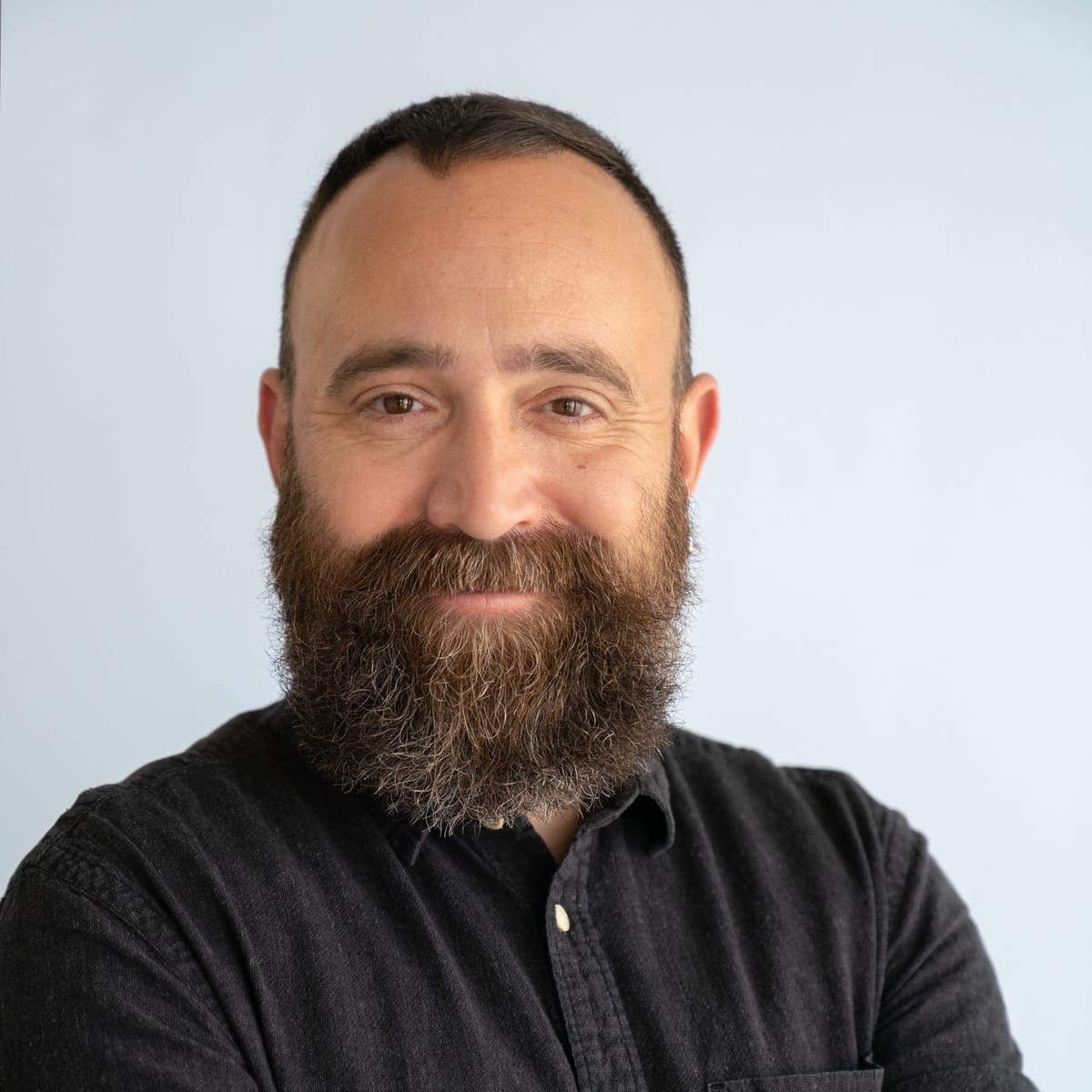
Noise, Power, and Minneapolis (Gabriel Saloman Mindel)
The year is off to a very disturbing start thanks to ICE’s violent paramilitary incursion in Minneapolis-St. Paul. Minnesota citizens have responded with mass protests and direct action, much of it sonic in nature—with the sound of whistles alerting neighbors and making life harder on ICE.
This episode, we speak with an expert on noise, power, and protest who also happens to live and teach in Minneapolis: Gabriel Saloman Mindel. Gabriel is one half of the Noise band Yellow Swans. Last month, we discussed the aesthetics and politics of noise music.
This month, Gabriel discusses settler-colonial ways of treating the land, humans, and the soundscape in service of capital and political power, as well as noise, protest, and political power in the troubling context of current events.
This episode features an interview we did in November and excepts from a follow-up in December, after the ICE incursion began. If you’d like to hear the full conversation about Minneapolis, we’ll be dropping it in our members feed. (If finances are an issue, just drop us a line an we’ll get you access.)
Gabriel has an MFA from Simon Fraser University and a PhD in the History of Consciousness from UC, Santa Cruz. He teaches at. Learn about upcoming Yellow Swans shows on their Instagram.
Also mentioned: Mack’s launched a new newsletter series, "What has the digital done to our listening?"
Transcript
Intro: SpectreVision Radio.
This is phantom Power.
Mack Hagood: Welcome to another episode of Phantom Power, a podcast about sound. I'm Mack Hagood. The year is off to a very disturbing start here in the United States, thanks to ICE and its Operation Metro Surge in Minneapolis and the neighboring city of St. Paul, the Department of Homeland Security has called this, the largest immigration enforcement operation ever carried out in the United States, but let's call it what it really is it's a military incursion into Minnesota sowing, chaos, murdering two people on the streets in cold blood. Renee Good on January 7th, and Alex Pretti on January 25th. There have been mass protests and direct action by Minnesota citizens. Much of it's sonic in nature, lots of whistle blowing to alert neighbors and to resist ICE.
Minnesota Governor Tim Walz has put his own National Guard troops on standby, while the Pentagon has two infantry battalions on standby for possible deployment in Minnesota. Mainstream news outlets like The New York Times are saying that Minneapolis right now feels like a city in a civil war, and it feels like things are on the verge of truly spinning out of control.
Given all of this my guest, this episode could not be more fitting. Once again, we are featuring Gabriel Saloman Mindel in part two of our discussion about noise, power, and politics.
Gabriel is one half of the noise band Yellow Swans in the first part of my interview with him last month we went really hard on the aesthetics and politics of noise music, but today we talk about the other side of Gabriel's really adult life in which he earned an MFA at Simon Frazier University. Got a PhD in the history of Consciousness at UC Santa Cruz, and join the faculty of Minneapolis College of Art and Design.
A lot of Gabriel's scholarship focuses on settler colonial ways of treating the land of treating human beings, and the soundscape in the service of capital and political power. His dissertation was about noise, protest, and political power. So Gabriel and I recorded our original interview on November 14th, 2025, two weeks before Operation Metro Surge started in early December, and we talked a lot about how settler colonialism separates the environment into these zones of purity with all of the racial and ecological violence that that implies. And we also talked about the effects of these beliefs and practices on the soundscape and on listening in North America, doing so through examination of the work of Raven Chacon, Hildegard, Westerkamp, and even Minneapolis's own Prince.
But given that discussion that we had back in November, and given the fact that Gabriel lives and teaches in Minneapolis, I decided to check in with him again by phone to see how he was doing and get a sense of things on the ground there in Minneapolis.
That call took place on January 21st. After the murder of Renee Good, but before the murder of Alex Pretti. And just to let you know today, right now, I'm recording on Sunday the 25th, so things may have changed in Minneapolis by the time you hear this.
So I gave him a call and that's when I learned that on top of living in this city under siege, Gabriel learned shortly after our interview that he's got cancer. It's a lung cancer that has spread into the lymph nodes, but incredibly, his prognosis is actually very, very good, he's taking a very effective medication and Gabriel even expects to play his upcoming shows in Europe in mid-February.
But, needless to say, this has been a remarkably stressful time for Gabriel on multiple fronts, and I was so impressed by his remarkable equanimity and hopefulness in our phone conversation. So I'm gonna add some of that conversation, that more recent conversation towards the end of this episode. I'm also going to put a lightly edited copy of our full phone call in the Phantom Power Members feed.
And for the current episode that you're listening to, if you're listening to the members version right now, you will also of course get Gabriel's excellent 'What's good?' Segment where he discusses, good things to listen to and read and do. That was a really great conversation, where we talk about sound walking among other things.
Subscribe to the newsletter or become a member. If you want to hear that podcast, it's all at mackhagood.com. Okay, so here's my interview or my plural interviews with Gabriel Saloman Mindel.
Mack: When you left Yellow Swans in 2008, you first did an MFA at Simon Frazier University, home of, acoustic Ecology, the World Soundscape Project. So, can you talk about why you chose, SFU and what you did there?
Gabriel: Sure. Yeah.
Pete and I, we were both college dropouts. I didn't have a BA he didn't have a BA. We both were interested in intellectual life and scholarship, but it also just, that came down to reading books and talking about it in the van.
At some point I felt like I really still wanted to pursue education, but I also was sick of the US.
I just felt done with the United States. I was seeing someone in Canada.
It seemed like a good idea to not be separated by a border for a while. I went up to Vancouver, got my, permanent residence there and kind of just tried to make a new life there, post Yellow Swans. one of the things that came up for me is that it was very hard to work in Canada as a immigrant without a degree.
I found myself working in the arts, whether that was writing or curating or composing. exhibitions, things like that. And then I could work, let's just say for very little money as a house painter, or I could find other kinds of low skill, labor kind of work. And those were the two things that were helping me pay some rent and put food on the table.
And at some point I got a job at a coffee shop and I was in my thirties and, someone who was teaching at an art school, Emily Carr, next to the coffee shop, came in and they were buying a latte for me. And they said, you know what's crazy? I just talked about one of your projects in my class the other day. And I said, that sounds so cool.
How large would you like your latte to be? And I, at this moment, I just felt like, there's nothing wrong with work of any kind. I mean there's dignity in it. Even being a barista, I took pride in it, but I, just felt like I got something else to offer. I want to teach. so I was living in Vancouver and For whatever reasons, I didn't think I should go and finish a BA. I felt like there had to be a way to get directly into an MFA so I could go as quickly as possible from there into teaching.
And I looked around and one of the only schools that was willing to even entertain the idea was Simon Fraser University.
They had a policy that, people whose work in their field was equivalent to a bachelor's could be considered by graduate studies. no one had ever asked the art school if that was possible, but I did. And, the folks who worked there, including Judy Radul and Sabine Bitter, these amazing women were really open to trying to support me.
And based on what I submitted, they said yes. And they went to administration and they basically got me into the MFA without the bachelor's based on my work in Yellow Swans, and also many, many years of doing what's called social practices or socially engaged art. in collaboration, primarily with my friend Sam Gould in this group called Red 76.
So as I was doing Yellow Swans, I was also doing these kind of discursive political, art projects that were often in public space or non-traditional art spaces. And that had taken me to various opportunities, including, Manifesta in Europe, which is a arts biennial, the Walker Arts Center, MoMA, these different places.
So I had a, decent CV as an experimental musician, and a working artist. I got into this MFA and everyone thought, well, you know, aren't you gonna do music because it was an interdisciplinary, or is still an interdisciplinary MFA, but I didn't wanna be a composer. I wanted to figure out how to take what I was doing as a, socially engaged artist and as a sound maker and find a way to put that into the gallery.
And so while I was there, I was of course very aware of the, world Soundscape project, and I thought when I first entered that I was gonna be hanging out with Barry Truax, and that inevitably at some point I would make my way there.
And I just didn't understand the kind of disciplinary, silos that you're forced into against your will structurally, but also socially.
I never ended up getting to work with Barry. I barely even made it up to the Burnaby campus itself. I was in the downtown art school most of that time.
Mack: You know, it's, funny, um, you mentioned not getting to work with Barry Truax, but, this past summer I was up there and I was interviewing Hildegard Westerkamp for my book. Who we should say for folks who aren't initiated was a part of the World Soundscape project and worked with R Murray Schafer and Barry Truax.
And does an amazing form of sound art called soundscape composition. And so I was talking to Hildegard and I was telling her about my own experiments with sound walks with my students, and I was talking about how I take my students on campus sound walk. And one of the things I always like to do is we have a big, complex, for ice hockey and figure skating, and I like to take them through that building, which of course is very cold and is very climate controlled.
And, you know, they have to keep the ice frozen. And these huge spaces that are very acoustically, echoey and kind of amazing sounding. And then I take them out the back door, and then we walk past these enormous, enormous exhaust fans on the back of the building that sort of just exhale this huge amount of heat and noise into this sort of non-space where the dumpsters are.
And, we're doing a silent sound walk, but what I'm hoping they're picking up on is the sort of externalities of the cool controlled environment are both sonic and thermal. Like we're walking through this
Gabriel: atmosphere
Mack: of heat, necessitated by the cool indoors. And so I was telling Hildegard about this and she mentioned to me a talk that you wrote, that referenced some of her work and also speaks to this issue.
So can you maybe tell us a little bit about that talk.
Gabriel: So this is one of the things that is so interesting about being in Vancouver, is that there is a, very heightened ecological consciousness. The city,
is very concerned with its relationship to the non human environment. Part of why it has this sort of signature glass towers downtown is because there's this, idea, I think they call it Vancouverism, it's an architectural idea that the glass reflects the sky and the sea, in a similar way to what we see in like Santa Fe, for example, like the idea is for the city itself to disappear into the, natural environment, but also, you know, there's incredible amount of labor that goes into trying to keep that environment out.
And, I think that one of the, challenges of Vancouver is that it loves nature except for Everything about nature is a problem, right? The rain, the ocean, air, the salt, there's a unresolved contradiction that is a part of what makes it look so beautiful from a postcard or from a bird's eye view, but actually quite punishing and difficult if you're a person living on the street level.
So I was interested, of course, in Hildegard's work. I mean, her compositions are amazing. I think Barry and Schaffer get a lot more, uh, attention as thinkers or as intellectuals. the influence of Schaeffer in particular is so utterly ubiquitous. and so I took it, of course, as a obligation to do some labor, to think about, well, what is the only woman involved in the World Soundscape project saying and thinking at the same time as these men that she's collaborating with?
And what I found was that her writing, of course is fantastic. Her ideas are really interesting. And she has this one text, it is called "The New Museum of Anthropology in Vancouver: An Acoustic Dump."
A great title. This was, um, something that actually was never published, but she has it on her website. I encourage people to read it. And the thing that's interesting about it is she's going to the Museum of Anthropology, which is one of the most remarkable museums certainly in Vancouver.
I mean, it's an incredible place to visit. it's designed by Arthur Erickson. He is a very important, Canadian architect. He is, mostly known for his brutalist structures. He designed the Simon Fraser campus in Burnaby, which has been, used as a, sci-fi backdrop in a lot of television shows and movies over the years, uh, and an amazing architect, right?
And so they had created this brand new building specifically to kind of highlight the totem poles, which are in the collection of this Museum of Anthropology. For anyone who's not familiar with Pacific Northwest, first Nations art. Totem poles are, as many people probably know or intuit, these storytelling, devices that are built outta gigantic cedar logs that are harvested from the forest around the community.
And they include, stories, ancestors, different kinds of, spirits and other, folks who are part of the life story of, the native communities, the indigenous communities in the Pacific Northwest. And these poles are typically harvested from a forest around the communities, village or around the communities, encampment. They're placed in the ground and they're meant to stay there. they're serve an incredible number of functions that are specific to the cultures, but they're meant to stay there and exist in the same ecology or ecosystem as the original cedar that they were taken from.
All of the rain, the mist and fog, the ravens, the forest life and the human life that is part of that ecosystem. Though the poles are not separate from that, they're still embedded in it. And in fact, the ideas that they'll be there until they themselves, eventually collapse and return back to the land. To take those out of their context and then placed inside of a museum is of course a quintessential colonial purpose of the museum. it is nothing unique or original except it just happens to be specific to these cultures and communities.
What I think Hildegard Westerkamp was astounded by is that there's this building that was created to highlight and create a very particular visual sensorial experience for visitors encountering these beautiful, belongings and totem poles, and yet there is this terrifyingly, loud and awful HVAC system that no one seemed to think about, but just simply installed. And that this HVAC system is in the museum is just a particularly onerous example of something that is common in most modern buildings, right?
So we think about the visual aesthetics at its best, right? We think about the visual aesthetics. We think about access, we think about people's moving bodies in the space. we think about how it's gonna look in a photograph, and particularly in museums. There's a lot of thought put into sight lines and, how the architecture interacts with different modes of display. But there's almost no thought put into the aural experience. And anyone who's listening to this podcast has surely had an experience of being in a museum or a building and just suddenly feeling like, am I the only one who can hear that?
That HVAC is relentless. Or that other tone that is this sort of whining generator or, something that's happening next door is utterly distracting.
Mack: Yeah.
Gabriel: and so even though I think she didn't explicitly say this in that article. What I felt she was doing was reminding us of something that is intrinsic to a kind of settler colonial, way of, trying to manage the world, right? Which is by, determining what is external to the world and what is internal, what is allowed in what is, forced out.
And I'm all for HVACs, especially post COVID, I mean, it's insane that we didn't invest in, HVAC systems across our institutions in order to preserve people's health. But with that in mind, it's very transparent that there's this sense that even if we make the HVAC quiet inside, its exhalations outside are not our problem, right?
This constant attempt to externalize what we don't want. And I'm thinking here in some ways of, Mary Douglas, the anthropologist and her definition of dirt as matter out of place. And I think a, few sound studies folks have picked up on this as one possible definition of noise, that it's sound out of place, right? But we are desensitized to it as urban people. We're desensitized to it because we feel powerless to interdict. and I guess something that really struck me about Hildegard's work is that she is not trying to exclude the city or the urban from our awareness, she's trying to understand how to navigate it and her kits Beach Sound Walk I think is maybe the most explicit example of her actively wrestling with that, right?
Hildegard Westerkamp - Kits Beach Soundwalk: It's a calm morning. I'm on Kids Beach in Vancouver. It's slightly overpassed and very mild for January. It's absolutely wind still.
Gabriel: She's walking us through, a process of listening to the built environment, to what is obscured by the built environment. But then in the very end of that piece, she brings us back to the built environment and she describes it as the monster, and she talks about needing to confront the monster.
In order to be able to live with it. and so I found that just to be a really inspiring, way of trying to, move past this kind of, again to think back to Marie Thompson there moralistic assumptions about noise and the good and the bad of it. But I also think it leads us to a way of thinking through settler colonialism for those of us who are non-indigenous, to think about what are we trying to exclude and what would it actually look like as listeners, as sound makers? To not exclude things, but to actually begin finding ways to be in a more holistic sense, fully immersed in the sound world.
And if there's things we don't like to think through, like, well, what are the systems and structures that have produced those things since, as Schafer pointed out 75 years ago, a lot of those things are a product of industrial capital. they're products of, power exerting itself in the soundscape without our consent as democratic citizens. I think that indigenous scholarship, indigenous sound artists have done an amazing work of helping us think through those problems. I think Hildegard is approaching a similar set of, problems and potential solutions, but from the position of an immigrant, and I think that's really interesting and helpful.
Mack: Yeah. And I would say in your recent work, this has really become a central theme, this exploration of settler, colonial ways of exploiting the land, and then indigenous ways of knowing the land that could potentially provide alternatives to that.
Gabriel: I mean, being in Vancouver, it's very different than California. Very different than a lot of places in the United States in terms of the ways in which, indigenous people are present involved in culture and society. In California there was just a very explicit and intentional genocide that really has pushed indigenous communities who are still there and thriving and doing great work.
To the margins. And certain things like gentrification and the cost of living have only intensified that kind of, again, externalization right, of a particular unwanted community of people. so as a child of California, I was indoctrinated in a kind of settler colonial obliviousness.
Um, I really didn't understand what it meant that, settler colonialism had occurred and what my obligations ethically were to indigenous people, which is not to excuse because there's plenty of California people doing amazing work in solidarity and collaboration with indigenous communities.
But when I went to Canada, I couldn't avoid it because First Nations, particularly in that, Coast Salish language area of Vancouver and south western BC are such prominent political actors, cultural actors. they're such a clear presence. And in that context, it became really critical for me to catch up.
And I would say I spent a lot of time trying to understand how to work in collaboration and think critically about my relationship to being a resident, there, being a guest in, and what it would mean to have a kind of ethical, obligation, not just individually between myself and other people or as a democratic citizen, but even in my work as a musician, as an artist and a scholar.
I have article coming out about, the use of silence and Raven Chacon's work from Sound, Stage and Screen
Mack: I, I read that piece. and so Raven Chacon was a MacArthur fellow. he's a Pulitzer Prize winning composer. and I did not realize you, you actually knew him back in the day in the noise scene.
Gabriel: Yes, Yellow Swans would play in LA as often as possible. Lots of friends, great musicians, artists down there. And one of the venues we played or would sometimes just go down to LA to hang out in, was Ill Corral.
And Raven was the door guy after he graduated from Cal Arts studying with James Tenney and, a bunch of great composers over there. he stayed in LA for a while and he was the door guy. He also performed but that's how we first met. And then over the years, stayed in touch, just because he has this background in noise and punk, but he's also a composer and is deeply committed to bringing into all of that his own, you know, indigenous musical cultures and concepts.
And I just saw that he was doing these really interesting things that bridged in some ways the gap between noise music as just a music genre and, modern composition and sound art, and even visual art. And that felt really unique. And, he was uniquely talented. So I, stayed in touch and traded music through the mail.
Mack: Yeah, I, think his work is really amazing and somebody I'd love to have on the show. and the piece that you wrote about was the one that won the Pulitzer Prize, which was sort of like this minimalist composition designed for, basically any church with a pipe organ, is how I understood it.
but you've been speaking a lot about, the relationship between sound and space. The way I interpreted that piece was that it's feeling out the spatial dimensions through sound, through these resonant tones. but what I found really interesting about, your, interpretation was that you were more interested in the use of silence.
Mack: Could you maybe talk a little bit about that? 'cause I thought it was really interesting.
Gabriel: Sure. I mean, I'm happy to, and also just want to say, you know, Raven has done a great job of speaking to his intentions and, you know, there's a wonderful article in The Wire from a few months back. Lots of interviews with him online. So I encourage people listening to this, as you wait for Mack and Raven to put together a conversation for Phantom Power,
Mack: I would love that.
Gabriel: Please pursue it, you know, look, up his work. find interviews with him. What I found interesting about Raven. Is that he doesn't refuse or, ignore the influence of Western music. And by Western, I mean, it's a complicated term, but, you know, European and, Anglo-American in sort of concepts and, projects, and one of those influences is John Cage. You know, he has a few works that really explicitly, are sort of a response to Cage, but he also has works that I think are more, implicitly challenging the normative concept that we have of silence. And I don't wanna rehearse too much the different ways in which we talk or debate or think about silence, but one of those is, to take away from Cage's 4'33, which is for anyone who doesn't know a composition where there is four minutes and thirty three seconds of composed silence that is meant to be performed. One of the takeaways is the kind of shock or surprise that the world is never really silent, that it's full of noises. maybe the invitation that we ought to listen to those noises as something that has aesthetic content or has some sort of value to it the way we do listen to music.
And I think, again, there's a kind of hermetic way that that's often positioned, which is to say, either the pursuit of silence is a failure or it is, an ironic experience to try and, engage in silence from this position.
But I think from looking at it through the lens and alongside, critical settler and, indigenous scholarship and the ways in which indigenous people talk about sound and listening, it is actually a question of relationship. That silence is not only something that doesn't properly exist. The pursuit of it is a pursuit of a world where certain things have been excised and removed from the landscape.
And that process of removal is, absolutely coincident with, other kinds of, historic violences and, even present conflict, right? So whenever we conceptualize that there's such a possibility of extricating ourself from relationship. We are imposing a self-and-other relationship that is typically very violent. So we're seeing this now with the fascist raids that are trying to remake this country into something that somehow impossibly could be a white country again, you know, through the lens of, removing, people who allegedly have immigrated here illegally or what have you, but you can see this in the logic of prisons.
You can see this in the logic of borders, and you can see this in the fundamental logic of dispossession, which defines the settler colonial, indigenous relationship. And so I thought the way that Raven is using silence is always as a practice of listening to the land and listening to the land as a place full and animated by sound. Voiceless mass is a weird, inversion of that at first glance or at first listen, because it's a very dense piece of music. it is primarily in the lower register and some of the higher registers.
So there is a very wide middle ground that is relatively absent from that. It implies a choral, right?
Mack: Yeah.
Gabriel: It would be a mass of voices. Raven's been very explicit that the piece is an acknowledgement of the church's role in the making voiceless indigenous people, whether that's through, active extermination, through, things like boarding schools where children were removed from their families, and many children died in these boarding schools.
But in addition to that, the ones who survived there were attempts to prevent them from speaking and understanding the language of their families and their ancestors. And so there's all these different ideas of voicelessness that are made manifest in this kind of empty space
and I think that by placing it in the church, Raven was both trying to see what was possible to say explicitly to the church and its audience and its community, through the language of the church, which we can call the pipe organ. But I think also. Was really trying to summon an experience of absence.
And this sense that, the mass of voices that are not audible, is a haunting loss that we should still be grieving for, but that we should also be trying to find some form of accountability and justice around.
My interest in, Raven is the hybridity of this work and the way that he is trying to find points of intersection and interweaving of these different cultural and aesthetic, positions.
Right? His position as an indigenous person, as a Diné Navajo man, but also as a kid who grew up on heavy metal who was involved in a noise scene and a punk scene in LA who studied contemporary music, who is composing, using graphic notation but also using traditional modes of notation and that he doesn't really explicitly distinguish between those things, so much.
I mean, arguably he has different sections on his website, but really, like, to him, these are all similar works and they all belong in conversation and there's room for that conversation. you know, that feels really important in this moment and particularly in thinking about, what do we gain by creating space, but also like, fighting alongside indigenous people for space, for indigenous voices.
And, sounds to be heard and how that could potentially transform our democratic politics, but also our relationship to the non-human world.
Mack: Yeah. this is a, an abrupt transition, but like, another thing I wanted to get to in your wide range of interests, I mean, 'cause as productive as you guys were in Yellow Swans, that seems to be some continuity in what you're doing as a scholar. 'cause you write a lot and, you are also, I mean, who isn't really, you're a Prince fan.
And, you shared with me, I think it was sort of like a, prospectus maybe for a short book on Prince. can you talk a little bit about that? 'cause I thought this was super interesting as well.
Gabriel: thank you. well, I'll start off by explaining. I have a manuscript, originally this was intended for Duke's single series. My editor was Joshua Clover, who really tragically passed this year.
You know, Joshua has a very particular relationship to music as a music critic, but also as a, vowed lefty Marxist and also an amazing poet.
But the project itself, it was partly a way for me to navigate what to do after my PhD. I didn't want to immediately return to the dissertation. for what it's worth, the dissertation was on noise, protest and power, basically asking why are protests noisy?
Mack: And we should say you did that at, UC Santa Cruz.
Gabriel: Yeah, in the history of consciousness program.
Yeah. So I, just finished that maybe two years ago. I wanted to have a different project that gave me a break from it, but also felt actionable, like I could really get this done. And so I wrote this, relatively short, 40,000 word manuscript about Prince and his relationship to the end of the world. So the reason I wanted to write about Prince was not because I was a diehard Prince fan, and in fact, I started this project before knowing I would be moving to Minneapolis and teaching at a school here, was purely coincidental.
Mack: It was fate.
Gabriel: It was fate. but I, I had had this experience when I moved up to Portland, Oregon in 2001, to escape the kind of financial hardships of the first dot com boom in San Francisco and to start a band with Pete, Yellow Swans. I was going around to house shows, punk houses, queer houses, anarchist houses, the different kinds of house parties that were ubiquitous in the aughts of 2000, in Portland, Oregon. And I kept on noticing that at every single dance party, at some point it didn't matter what the music was that people were playing, at some point someone would put on Prince and they would specifically 1999 and the room would change. Everybody would come out from the porch, people would get off the couch.
Even the like two cool for school anarchists that were just making fun of people would get up off the couch and everyone would dance. And for the whole song, the way that people dance to it was with such a strange intensity that it felt like there had to be something going on that I didn't understand.
'cause it's a good song. It is a good song, but it's not that good. I mean, there were better songs at the time for dancing to, so I finally asked a friend and I was like, what is up with 1999? Why is, every, punk in Portland so obsessed with this song? And what they told me is that I think it was the spring before I arrived in, Portland.
So in 2001, there was a house party, and it was a house party at a house full of folks who were known to be connected to, different kind of anarchist projects, including Earth First. And, the police had raided, and they had quite obviously raided it as a form of collective punishment. You know, it wasn't just a complaint. The police had come full of riot gear ready to just bash heads. And the story goes that when the police kicked down the door and people started fighting the cops, the song 1999 was on the turntable.
I don't know if that's true. I've never gotten confirmation that that is true, but that's the story I was told, and it made a lot of sense.
And it's worth keeping in mind that I was in, Portland, Oregon in 2001. Right. And the WTO protests in Seattle had just happened in November of 1999. There had been a huge made day, uh, March that had really been humiliating for the police in 2000. So there was a deep, deep seated antagonism between Portland police and the radical left community in Portland. I was fascinated that this song had become an anthem, right? It had become an anthem for this group of folks that were, certainly mixed race, but I would say overall you would read them as, white punks.
And I was fascinated that this song that had no overt political message had become this deeply politicized anthem for a kind of leftist anti-police, resistance. An anti-capitalist resistance.
So that just haunted me and it was always on my mind, and that anecdote was always on my mind. And then finally, I, got around to discovering the anecdote that 1999 was, ostensibly about nuclear war and the end of the world brought about through nuclear war. But it turns out that it was inspired by a documentary in the eighties about Nostradamus, narrated by Orson Wells
Mack: This part blew my mind. 'cause I know the exact documentary you're talking about. I saw that as a little kid too.
Gabriel: Yeah, the current fm, which is a radio station in Minneapolis that has long been a home for Prince and Prince fans. they did a podcast series and they interviewed some of the members of the band and they talk about being on the road on tour, and they stop off at a hotel which had advertised free HBO. This was like the best thing you could possibly imagine for a band on tour. they pile into the hotel and everyone goes to their separate rooms and they turn on HBO, and they're watching this documentary. And in the documentary it says, keep in mind, this is like 83, I think, or 82, it says, according to Nostradamus, there's gonna be a nuclear war in 1999 in November, I think it was. And it was very explicit, like this is what he said. And you get this after almost an hour of all of these predictions that allegedly had come true. So the next morning they all come down into the hotel lobby and they're like, did you see that documentary 1999? Can you believe it?
And as one of the band members says, this is what differentiates Prince from all other human beings, he comes down and he just says, I've written a song. So, you know, this just got me thinking about, right. I mean, it's amazing. It's a great story, right? And, so this gets me thinking about like, well, what is this connection, if there is any, between the kind of, radical politics that I was getting involved in that had this somewhat kind of a view of the world, right?
That a great revolution's gonna happen and the world will be peaceful afterwards.
I mean this, you know, I don't wanna be that reductive, but this is a huge part of what drives leftist politics, and on the other hand, there's this person who is not a leftist. I mean, he had politics and he did a lot of social, justice work, but he wasn't really political.
Not the way we would think of a political artist. Not the coup, you know, not dead preez. I mean, he was something else. And what were his religious beliefs? And so, as I started trying to unpack more and more why did Prince write a song about the end of the world? I realized that its not so much that there's a direct, embeddedness of, revolutionary politics, apocalypticism, Prince's religious views, but actually that they all produce this weird constellation and that in trying to understand all these things, I started feeling like I understood American culture, American politics in a more deep way. And I kept on finding these coincidences and synchronicities that seemed interesting, but on their own are just like what I've shared, interesting anecdotes. The hope with the project is that in combination they start to give you a sense of American apocalypticism.
And that by understanding a particular period of American apocalyptic system, which I would say is, you know, the eighties into the turn of the millennium, you see the way in which some of the things we're experiencing now are, in a way reenactments of already existing, conflicts, culture wars, political problems.
And that, you know, there's a sort of sense making of the present through this, historical, view. And that 1999 is actually a useful kind of, codex in some ways for unlocking what it is that is the sort of very fabric of American, uh, psychopathy in some ways.
Mack: Yeah. Uh, very nice. Well, I look forward to that coming out wherever and whenever it does. Um, 'cause it, it sounds, it sounds meaty.
Gabriel: thank you.
Mack: Um, Well, this has been just wonderful. It's been just nice hanging out with you for a couple hours and talking.
Gabriel: Really a pleasure, thank you Mack.
Mack Hagood: Okay, so that was my conversation with Gabriel in mid-November, and again, just a couple of weeks later, this Operation Metro Surge begins in Minnesota and it really brings a lot of the themes that Gabriel and I had been talking about into this kind of crucible of violence and military action.
And so I wanted to, you know, talk to him about that. And so I'm just going to include a little bit of that conversation here now, sort of picking up where we left off. So here it is.
I think at this point, at least 3,000 people have been detained, including 150 American citizens, and at least four. Mm-hmm. Sioux, people, right? Like, have you heard about this? Yeah. So Lakota
Gabriel Mindel: Nation indigenous folks who are, not only, American citizens, but also ICE and federal law enforcement don't have the jurisdiction To actually enter into, indigenous lands, uh, sovereign territories or lands. Yeah. And so part of what they're doing, at least from what we're hearing from, Lakota leaders is they're literally holding them hostage, trying to force Lakota to negotiate permissions for, federal, immigration enforcement on their territory.
So, and they're holding them at, Fort Snelling. 'cause that's actually where, the federal government has, property that they're able to stage this kind of military operation from. And Fort Snelling historically was always the American Empire's foothold in these lands.
And it's where the largest mass execution in American history happened, native people. It also is where there was essentially a concentration camp at a time when the US military was trying to force, native people in this region into submission.
So there's significance and historical resonance of this is very big.
Mack Hagood: It's incredible because so much of our conversation the second half of our conversation had to do with settler colonialism and this kind of incursion on the land and, and its implications for the soundscape and so forth.
Gabriel Mindel: so much of my recent scholarly work was a reflection on previous Trump administration or in the previous decade, and you know, the kind of long decade of, mass protests from Arab Spring through the George Floyd uprising.
And I remember really feeling like, is this work even relevant anymore? because things have changed so much. And, you know, what's been a meaningful and surprising for me is the ways in which ideas and questions and, things that I was thinking with in my, you know, dissertation research, but also in, in some of the articles I've published. It actually has become more relevant or is once again relevant. And so I was thinking about,
this article I wrote called Sovereignty, Sonic Limits Music and Spectacle at the Border for Studies in Social Justice, and this came out in 2025, but it's really building on material thinking about the first Trump regime and its approach to border enforcement. And I just felt like, God, I was talking about. all the violence and protest that was happening at the border as a kind of exercise of sovereignty and counter sovereignty.
And that just feels so irrelevant because what has happened is the whole country is the border, right? Yeah. Everywhere is now a target for so-called border enforcement or so-called, immigration enforcement and I was feeling really like, oh, I wrote this article for a different time, and that time has passed and no longer is meaningful.
But a lot of what I was trying to do was connect certain theories about the performance of violence at the border. To understanding, both the meaning behind that violence, but also why people are resorting to sound as a way of resisting. And that actually feels as relevant now as ever.
Mack Hagood: It's absolutely a spectacle. I wonder how you make sense of the relatively muted response in terms of protest, during the first year of the Trump administration compared to, the last year of the Biden administration, given what you just said.
Gabriel Mindel: Yeah. So this, is something I've been trying to wrestle with because like I said, I spent eight years of a, PhD and much longer as an activist and a person engaged in sound thinking about noise, thinking about protests. and I do have a very, I think, coherent theory of, why protests are noisy, why that noise is policed in the way it is.
But it really, all those kinds of protests were obviously determined based on a, premise that there is such a thing as a liberal democracy.
That needs to be, shaped and formed by popular consent and by, a kind of direct form of direct democracy that's meant to. In some ways, address the lack of actual direct democracy that a representational democracy like ours, jealously avoids, right? And so because electoral politics is so limited, protest becomes the only forum for directing Our leaders and people in positions of power, whether it's corporate leadership or university institutions like that, protest becomes the only way that we think we can push them into a particular direction. And what I've been thinking about with what's happening in Minneapolis, and I would be have to say like LA, and Washington DC, and Chicago.
Is that people are not trying to convince their representatives to do anything. And that calling what's happening, in some ways, calling it protest is a misnomer. Yeah. Because I really do think we at this point are attached to protests being a direct call to leadership to act. And what I really see is people doing what anarchists called direct action.
What people are doing is intervening on their own terms as everyday community members. Literally thousands of people, arguably could be tens of thousands of people, coordinating mutual aid. Bringing food to families who are afraid to leave the house.
Going to schools and walking students from the school to their cars. You know, there's all of this political activity and direct response that is meeting the direct needs of communities. And that are filling in the gaps that the state, and that includes the city, Minnesota, and certainly the federal government are failing to provide.
Mack Hagood: Well, I think, I think this, you know, I totally agree with you and I think it's because the administration is performatively not listening. I think it's led to this dispiritment and this understanding that, the public sphere, uh, as we had understood it as a space for liberal democracy and debate where a protest could actually be effective just isn't there, you know?
Yeah. and so direct action becomes the response. So it's might versus, might, rather than, constructing a rhetorical space.
Gabriel Mindel: Right. It's maybe might versus many. I mean, this is part of the, you know, the narrative that I think gets convoluted. There are I think 3,000 federal troops, roughly in Minnesota, and allegedly since early December, they've only arrested 3,000 people.
Now that's 3,000 people who have been arrested and all of their communities, impacted. So the impact of that is huge, and I don't wanna diminish it, but think about that for a second. Right? They've barely been able to make one arrest per officer, the sheer amount of, resistance that's happening and that resistance is not all of it, in fact, very little of it is physical confrontation. Almost every bit of it is noise. And behind the scene, quiet labor.
Mack Hagood: So yeah, that's part of my recent phone call with Gabriel Saloman Mindel talking about the situation in Minneapolis. And yeah, it was a really, really interesting conversation. in particular, we got into talking about sound as a form of violence, or at least a form of direct action on the bodies of, ICE agents, law enforcement and so forth.
really thinking about this vibratory space of protest or direct action, however you wanna call it. And we also, spoke for a while about gabriel's cancer diagnosis as well, so if you're interested in hearing the, full phone call, you can join our members feed. I'll also just send it to you if you want to email me.
But yeah, it was an interesting conversation, I wish I could fit the entire thing into this episode, but you know, we're a little bit last minute here and I wasn't quite sure how to edit it all down. But yes, that's it for this episode of Phantom Power. Become a member at mackhagood.com. You can also hear Gabriel's 'What's good?' Segment. Which I found really enjoyable. You can also sign up for our free newsletter there, our free newsletter on sound and listening.
I just recently dropped the first installment of a new series I'm doing on what Digital Life is doing to our listening abilities. I'll put a link to that in the show notes. You can also keep up with the whole series by signing up for the newsletter at mackhagood.com. That's mackhagood.com. And also just a reminder that Gabriel will be performing with Yellow Swans in London and in Brussels. that's coming up, February 13th through the 18th. He has three shows coming up. I've got links to that in the show notes. Today's show was tailored by Cameron Naylor.
I will talk to you again next month and in the newsletter. Bye.
