Oral Residue: A Zombie Media Theory Rises Again
They’re baaack! Everyone’s favorite pair of undead media theorists is shambling through the nation’s magazines, podcasts, and newsletters once more. The late Marshall McLuhan and Walter J. Ong have risen again, as a new round of commentators tout their idea that all of human history is dividable into three eras: the oral, the literate, and the electronic. Speaking last month on Atlantic journalist Derek Thompson's podcast, Joe Weisenthal of Bloomberg claimed that this theory “explains 99% of everything.”
Neither host nor guest mentioned how heavily contested—many would say discredited—this kind of “Great Divide” thinking is among scholars who study oral communication, literacy, media, and sound. Such caveats are not allowed in the Cult of the Great Divide, where over and over, new generations of journalists become mesmerized by a zombie idea, never to fact-check it among the living.
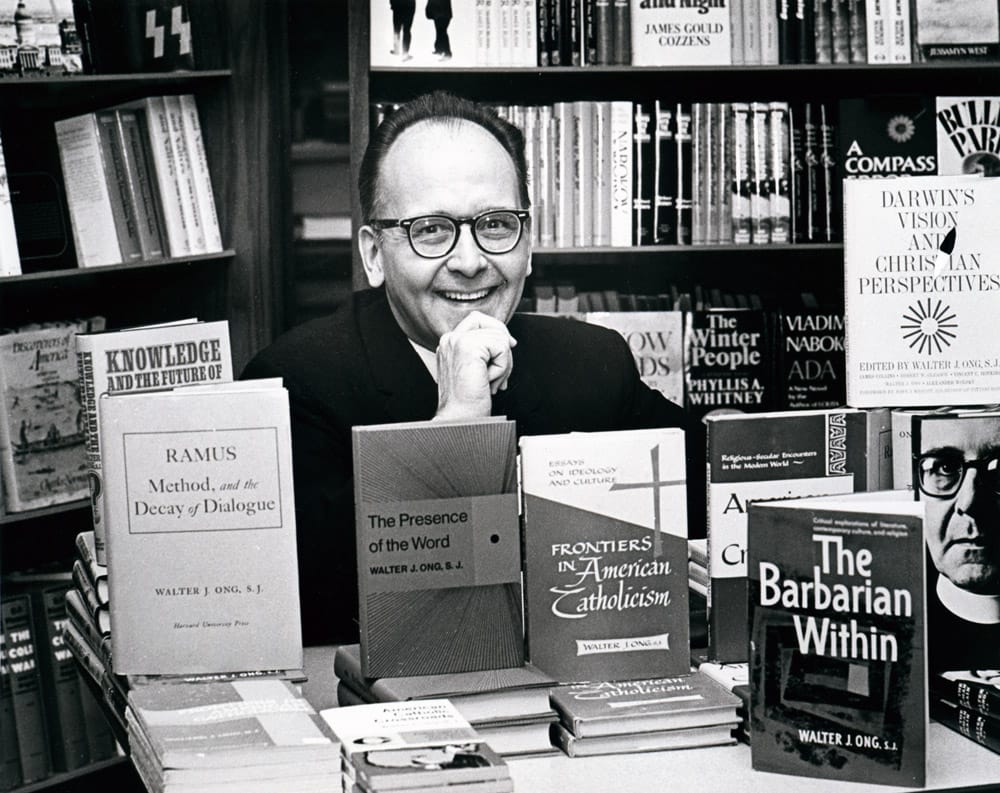
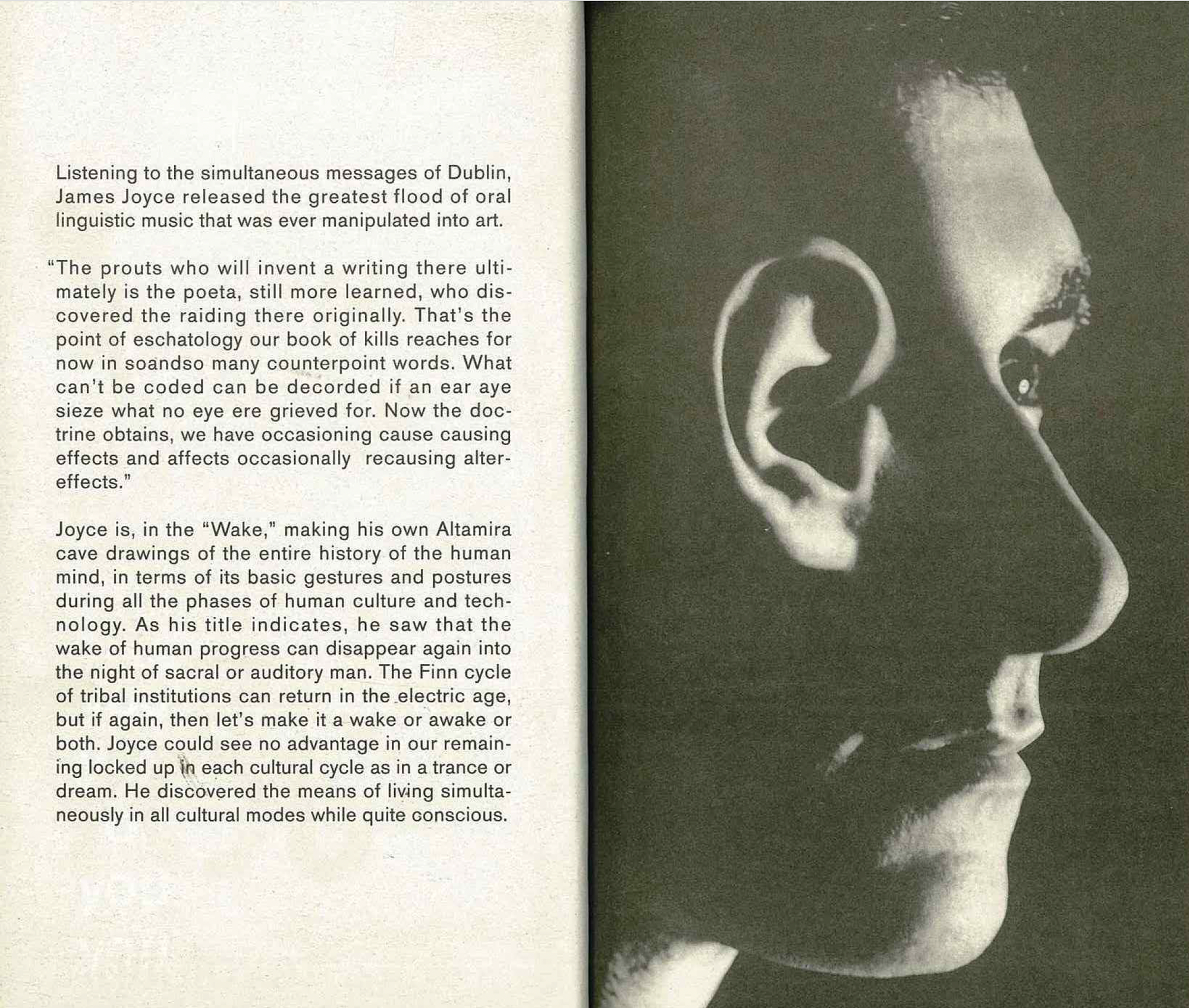
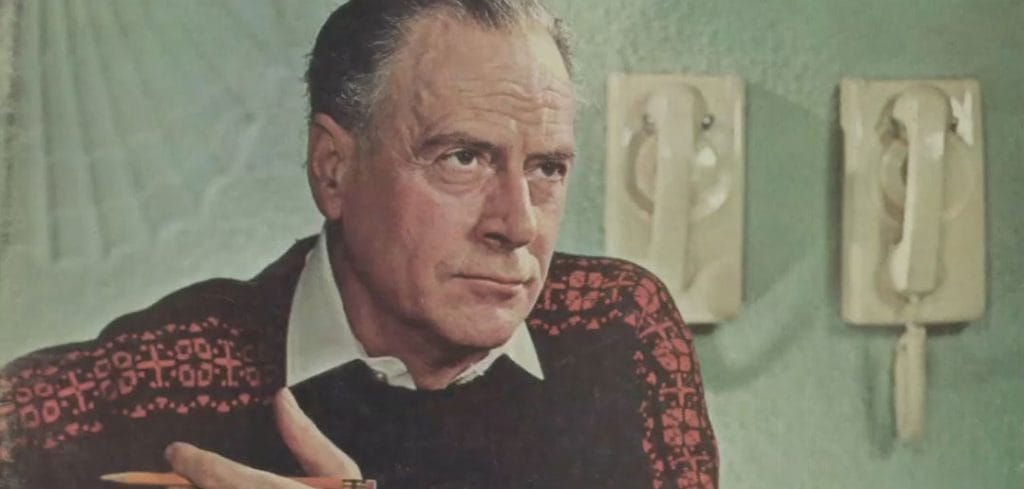
McLuhan and Ong first attracted media attention back in the 1960s and 70s. McLuhan’s 1964 book Understanding Media introduced the world to apparently irresistible concepts and aphorisms such as “the age of information,” “the global village,” “the medium is the message,” and even the word “media” itself (at least as we currently use it). Within a year, the Canadian sage was a full-blown talk show celebrity, dubbed “the most important thinker since Newton, Darwin, Freud, Einstein and Pavlov” by The New York Herald Tribune. Ong was less famous, but his theories about orality deeply influenced his mentor McLuhan’s work. His Orality and Literacy (1982) summarized his ideas in accessible language and is probably more frequently cited by journalists today than McLuhan himself.
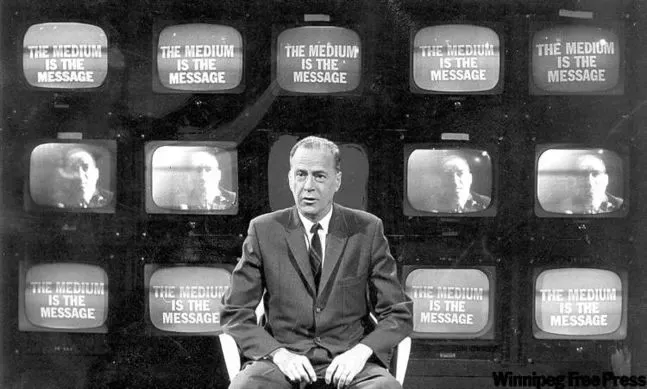
McLuhan cultivated his celebrity through obscurity, allowing his ideas to shape shift after his death.
McLuhan and Ong argued that the means of communication profoundly shape what we communicate and how society is organized. They weren’t the first or only scholars with this insight, but McLuhan proposed a maximalist version of the case, and his TV-friendly slogans like “the medium is the message” stuck in the mind so well that they felt like eternal truths. Like some French philosophers of his era, he cultivated his own celebrity through obscurity and paradox. If McLuhan’s use of terms like “hot” and “cold” media seemed inconsistent or confusing, you figured maybe you were just too dumb to get it. This spooky energy allowed his ideas to shape-shift and would give them, apparently, eternal life.
In simple terms, the Ong-McLuhan thesis goes something like this:
Back in the distant past, “we” communicated through the spoken word, producing an oral culture of myth, poetry, and general togetherness that was also a bastion of irrationality, “tribal” aggression, and collective amnesia. The advent of print detached the word from the speaking body, made knowledge visual and sequential rather than acoustic and communal, and by allowing us to ponder externalized words, rewired our brains to be individualistic and analytically detached. In other words, print produced “typographic man,” modern in his thinking.
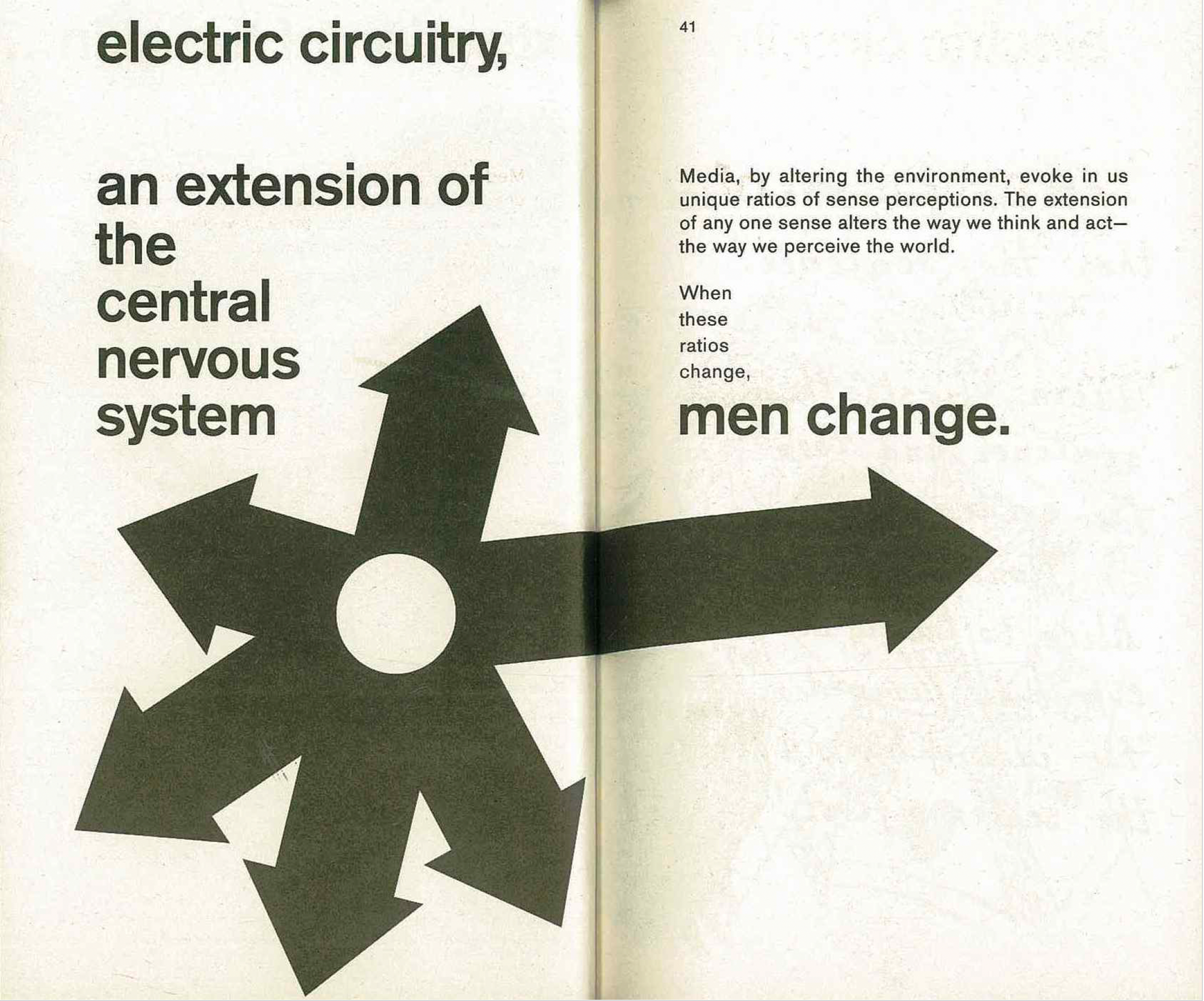
But then came the plot twist: Television, radio, and the telephone pulled us backward and forward at once, producing what Ong called "secondary orality," a new age of acoustic community and participatory energy–or as McLuhan called it, a “global village.” Secondary orality is technology-fueled “tribalism,” in which we all sit around the electronic campfire to share stories, for better or worse. These Great Divides between oral, print, and secondary-oral cultures changed more than the medium of communication—they changed the very fabric of the human mind.
Like a great conspiracy theory, the Great Divide reduces complex dynamics and problems to a singular cause.
People love Great Divide theory. It’s neat, clean, and—due to some slight of hand we’ll unpack later—seemingly able to explain “99% of everything.” Like a great conspiracy theory, the Great Divide reduces complex dynamics and problems to a singular cause. Like a great iPhone commercial, it feels revolutionary but actually supports the underlying ideology of consumer capitalism: For every new season, there comes a new technology that will change everything.
And just like a great marketing strategy or conspiracy theory, Great Dividism supplies slogans to think with. “The Age of Information” helped people make sense of—and find hope in—the turbulent but prosperous 1960s. “Secondary orality” informed moral panickers worried over declining literacy and a threatened Western Canon during the long recession of the 1980s. “Global village” was celebrated as gloriously prescient in the happy boom years of the 1990s Information Superhighway. And in 2017, when the nation was trying wrap its head around the new Orange Man in Washington, The New Republic’s Jeet Heer went back to McLuhan again: “Trump is truly ‘post-literate,’” he wrote, “and his ascension to the White House speaks to the lingering power of television.”
In other words, the moral valence of Great Divide theory seems to oscillate up and down with the mood of the nation.
At this point, I should post some disclaimers. First, I am not saying there is no value in media ecology, as research in McLuhan’s lineage came to be called. I’m a fan of Neil Postman, for example, who coined the term "media ecology" and whose work is more carefully engaged with the cultural and economic dimensions of media’s influence. Second, the Great Divide is a term used by critics, not adherents. Walter Ong fans argue that their man does not set up a sharp divide between oral and literate cultures. Indeed, he frequently describes a lingering orality in print cultures, which he calls “oral residue” (gross).
I’m not interested in adjudicating that debate. My point is simply that there is rarely much subtlety when McLuhan and Ong’s ideas make it into the popular press. Usually, it’s the Great Divide all the way.
The Great Divide comforts us simply by confirming our narrative of decline.
Today, commentators use the Great Divide to confirms a narrative of decline in our anxious age of Trumpian politics, middle-class collapse, social media addiction, and AI replacement fears. James Marriott deploys the theory in his hair-on-fire essay, “The dawn of the post-literate society and the end of civilisation.” “The world of print is orderly, logical and rational,” he writes, but the decline of reading and rise of secondary orality has led to “the stagnant culture of the screen age which is characterised by simplicity, repetitiveness and shallowness.”
For journalist-turned-media-ecologist Andy Mir, who in a McLuhanesque stunt of public scholarship, wrote an entire book in tweet form, the “digital reversal” to orality indicates that rational literacy was just a historical blip, what has been called a “Gutenberg parenthesis.”
Weisenthal also sees decline in the return to orality, finding evidence in an entertaining array of anecdotes: Trump’s use of epithets like “Sleepy Joe” and “Low-Energy Jeb” is a callback to Homer's “rosy-fingered dawn” and “swift-footed Achilles.” Echoing Weisenthal, Thompson muses, “Maybe the age of social media really was the revenge of orality. But an age of AI would be much more like the revenge of literacy.” Their podcast conversation pivots around the idea that the transition from book reading to tweeting and TikTok has left us in an eternal present of antagonism. One Weisenthal quote neatly encapsulates both the vibe and the assumptions about the senses that underlie the Great Divide:
So the ear, McLuhan said, is inherently a source of terror. It feels very digital. Even though we do look at the internet, there is this sense in which we can never remove ourselves from it. Even if we’re reading the internet, it almost feels more like we’re hearing it. There’s an immersiveness in contemporary digital discourse that I think is much more like hearing than it is about seeing.
There’s a grain of truth to all of this. I truly get the appeal of Great Divide theory. It’s obvious that the world and its human inhabitants are currently going through a lot and it has very much to do with our communications technologies. I’ve been teaching my class The Smartphone & Society for over a decade, during which time I’ve seen my students’ screen time numbers skyrocket while their test scores and reading comprehension have declined. In my weaker (you might say “irrational” moments), I’m almost ready to jump to Great Divide conclusions myself. There’s just something so comforting in the certainty the theory provides.
The reason Great Divide theory can “explain everything” is that it’s not grounded in anything.
The problem is, when you really examine Great Divide theory, you learn it is not built on the kinds of historical specificity or empirical analysis you’d expect. In fact, the reason it can “explain everything” is that it’s not grounded in anything.
Great Dividism makes claims about media without actually examining the technologies and the industries that make media, as scholars do in the field of media studies. It makes claims about the senses without studying the physiology and cultural practices that shape sensory experience, as scholars do in fields like sound studies. It makes claims about literacy without being literate in literacy studies. It makes claims about “tribal” cultures without anthropology and about oral cultures without knowledge of folklore. Even in McLuhan and Ong’s home field of literature, their claims about a transformation from an oral to a literate mind have been disputed from the get go.
At the end of his conversation with Thompson, Weisenthal says he wishes more people would become familiar with Ong, McLuhan, and others in the media ecology tradition. For my part, I wish Great Dividists would become familiar with Raymond Williams, James Carey, Jonathan Sterne, Richard Bauman, Ruth Finnegan, Sylvia Scribner, Brian Street, and the many other humanists who have critiqued and debunked Great Divide theory from all directions for over five decades.
Great Dividism erases decades of post-McLuhan scholarship because journalists fail to take the humanities as seriously as the social sciences.
I also really wish smart journalists like Derek Thompson, who would never accept an economic or political “theory of everything,” would take the humanities as seriously as the social sciences. I’m a regular listener to his show, in large part due to his well-earned reputation for studying the literature before engaging with a topic. I wonder why he felt that wasn’t worth doing in this case. He would have found a horde of opposing studies to spark an entertaining and illuminating debate.
Since that debate never happens in popular media, I guess I’ll have to supply it myself. And perhaps, when some next-gen journalist inevitably returns to the Crypt of the Great Divide, some fragment of my warning will have lodged itself in the circuits of their AI research assistant, moving it to exclaim, “Danger, Will Robinson!”
Towards that end, I’ll use my next newsletter to outline the main criticisms that humanists level against Great Divide theory, ranging from the empirical to the political to the ethical. Our current “media ecology” is indeed a disaster. But rather than just-so stories in which technologies appear out of nowhere to rewire our brains and senses, we need studies of the actual bodies, minds, cultures, technologies, economics, and power relations that got us to where we are. That story will be too complex to be contained in a snappy aphorism like “the medium is the message.” But that story will have the advantage of being much closer to the truth.
